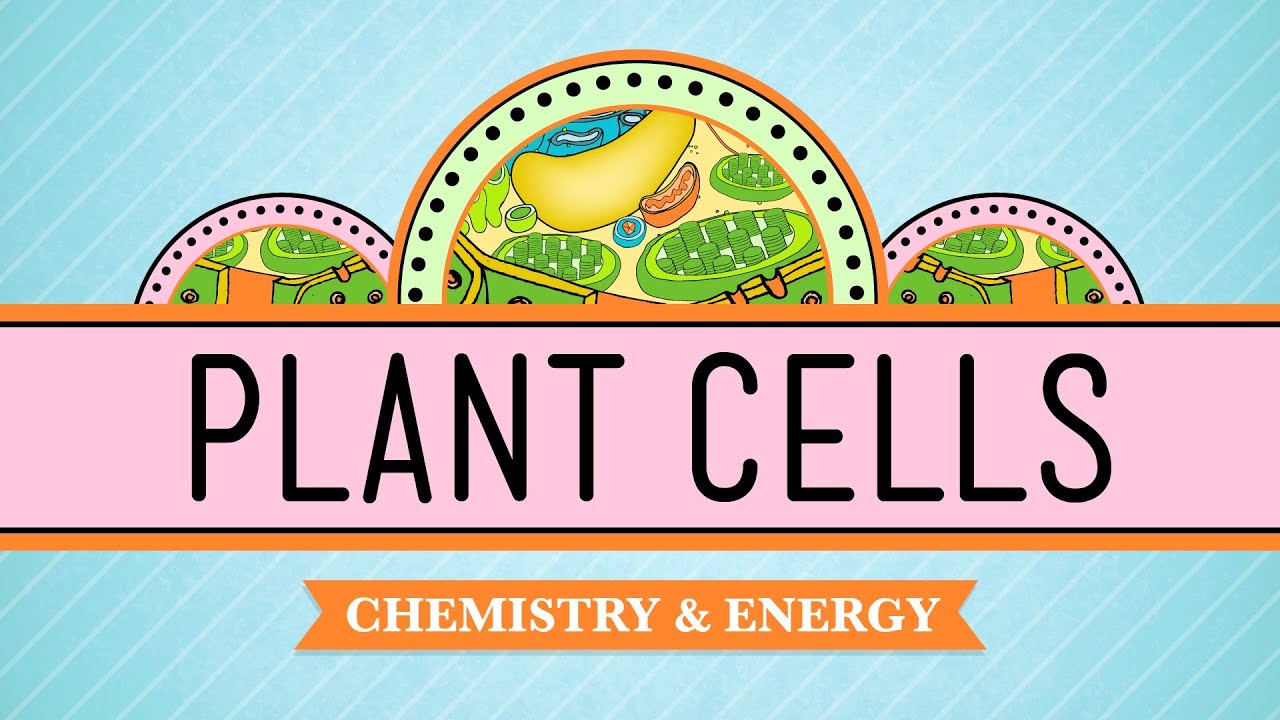
Crash Course - Biology - Plant Cells
Hank Green walks through how plant cells work and how they differ from animal cells, using the table of contents of Crash Course Biology to structure the argument. He starts with plant evolution, tracing how early plants developed roots, stems, and leaves to move onto land and survive outside water. From there he covers the split between eukaryotic and prokaryotic cells before narrowing in on what makes a plant cell distinct: a rigid cell wall built from cellulose and, in some structures, lignin for added strength. Chloroplasts get a close look as the site of photosynthesis, the process converting sunlight into usable energy, and Green connects that function to plastids more broadly. The central vacuole closes the lecture, explained as the structure that stores water and keeps the cell rigid enough to hold a plant upright. Green uses diagrams and quick asides rather than lab footage, keeping the pace brisk and the vocabulary defined as it appears, aimed squarely at students working through introductory cell biology.