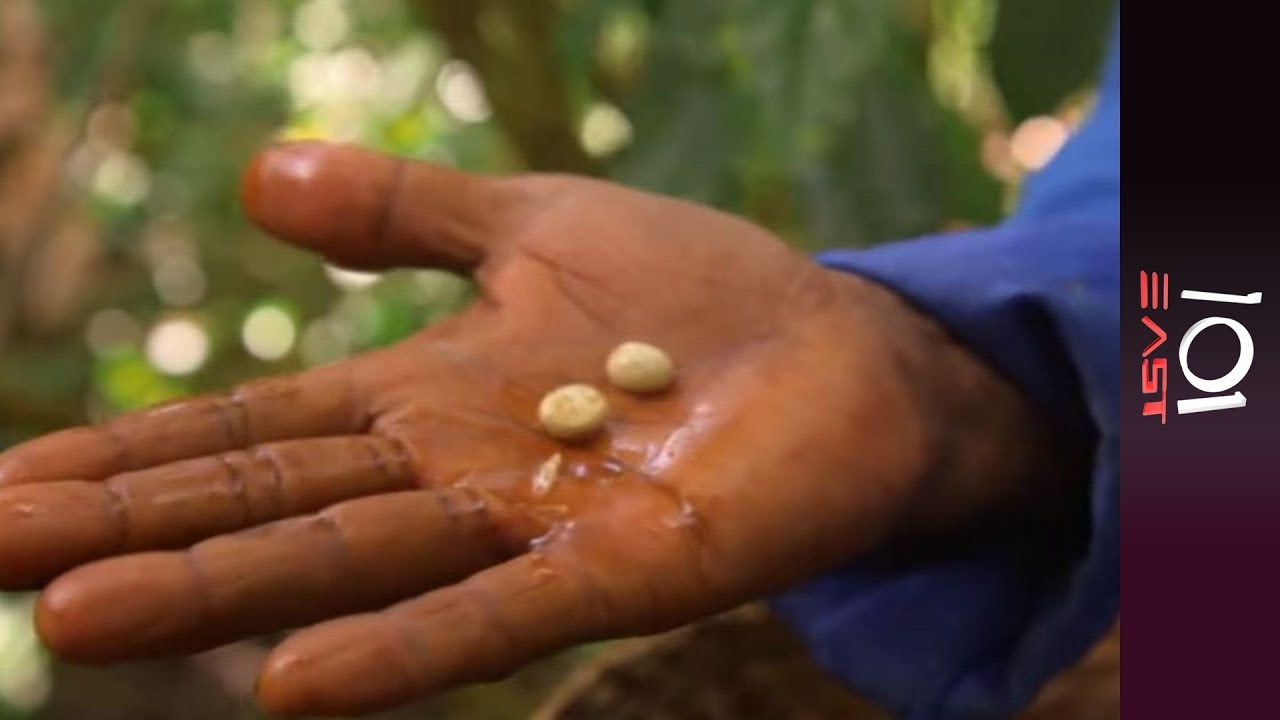
Where The Wild Coffee Grows
East Timor has no Starbucks stores of its own, yet most of the green coffee beans grown in its high-altitude farms end up in Starbucks cups worldwide, including the Arabian Mocha Timor blend the chain introduced in 2005. This 101 East report follows the crop that makes up 90 percent of the country's non-oil exports and supports 46 percent of Timorese households, tracing it from Portuguese colonial times, when coffee was half the colony's trade, through 24 years of Indonesian occupation that turned plantations into battlefields and wiped out two generations of farming knowledge. Neglect left the trees pesticide-free, an accident that now makes them prized by organic buyers, but yields remain half what comparable plots produce in Papua New Guinea. The film shows farmers who resist pruning for fear of harming a tree's spirit, and communities enduring a recurring four-month 'hungry season.' President Taur Matan Ruak argues in an interview that the nation must move past subsistence farming, while NGOs like Empreza Di'ak and Seeds of Life push for higher-yield methods against local suspicion of industrialization.