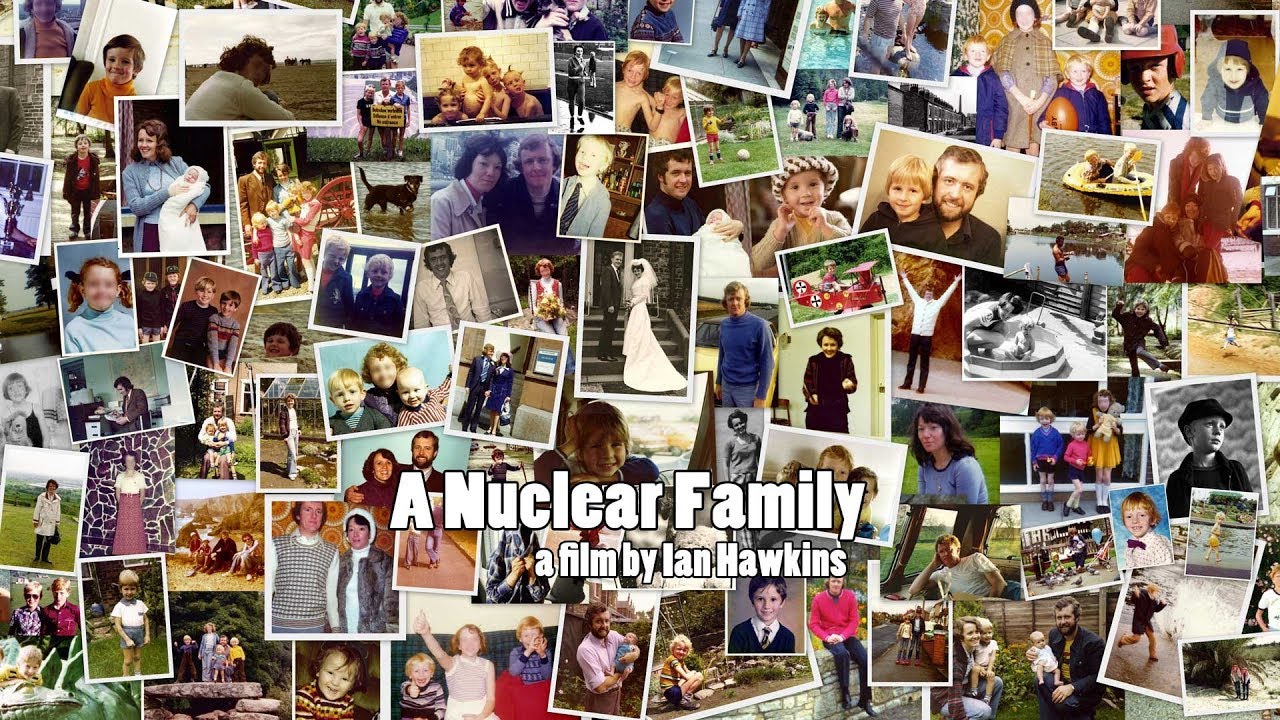
A Nuclear Family
In 1973, a woman walks out on her husband and their three children. Ian Hawkins was one of those children, and decades later he turns the camera on his own family to find out why. He interviews his father and siblings, sits with his mother's side of the story, and builds the film out of old family photographs and home memories rather than reenactments or outside experts. The result stays small and specific: one household, one departure, and the different versions of it each family member has carried since. Hawkins does not resolve the split into a single explanation; instead the film lets the contradictions between accounts stand, showing how the same year of a marriage's end reads differently depending on which child, or which parent, is remembering it. It is a home movie in the literal sense, made from the family's own archive, and its case is that an ordinary divorce, looked at closely enough, is never as ordinary as it seemed from outside.