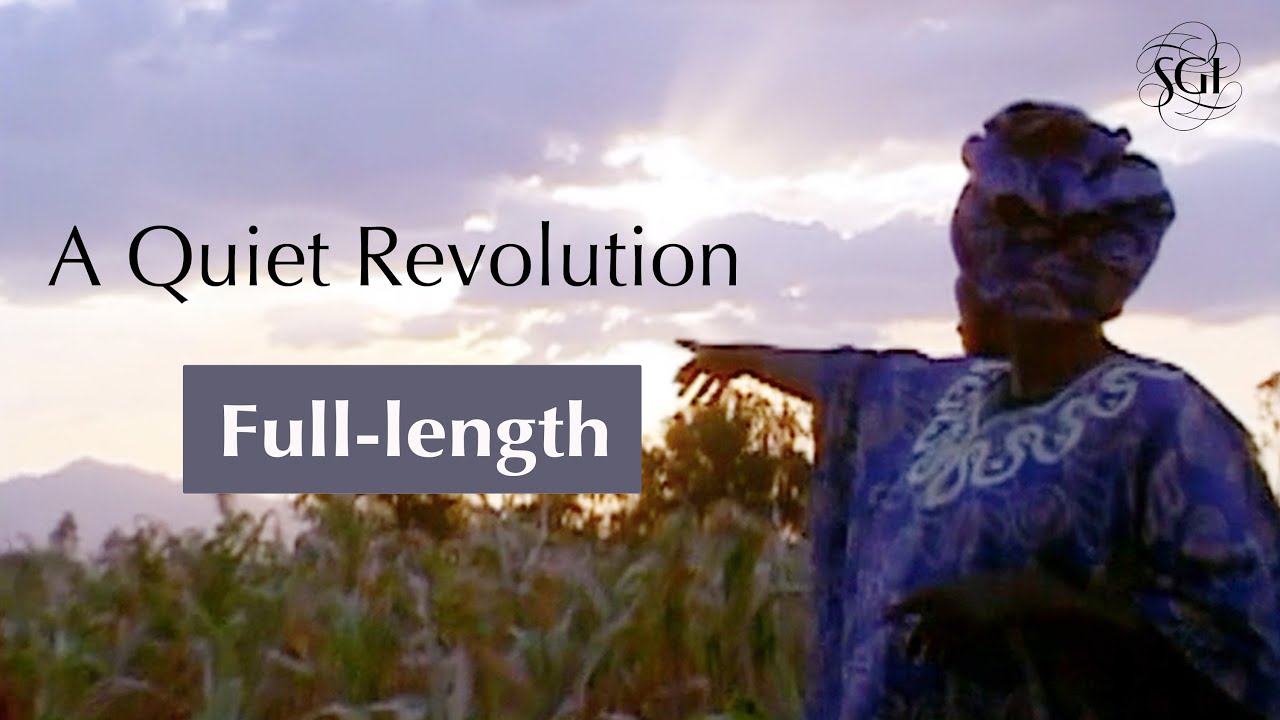
A Quiet Revolution: The Earth Charter and Human Potential
In villages across India, communities revive centuries-old rainwater harvesting techniques to bring water back to land that had gone dry, reconnecting the work to older agricultural traditions in the process. In Slovakia, residents organize against chemical pollution threatening their water and health, building the kind of local pressure campaign that rarely makes international news. The film's central figure is Wangari Maathai, who founded Kenya's Green Belt Movement and later won the 2004 Nobel Peace Prize; her organization is credited with over 30 million trees planted and with giving rural women a direct role in managing the land around them. Meryl Streep narrates, tying the three stories together as evidence that environmental repair usually starts with a handful of people acting locally rather than with policy handed down from above. Produced by the Earth Council with the UN Development and Environment Programmes and Soka Gakkai International, the film stays close to these three cases rather than surveying the movement broadly, letting each one carry the argument on its own.