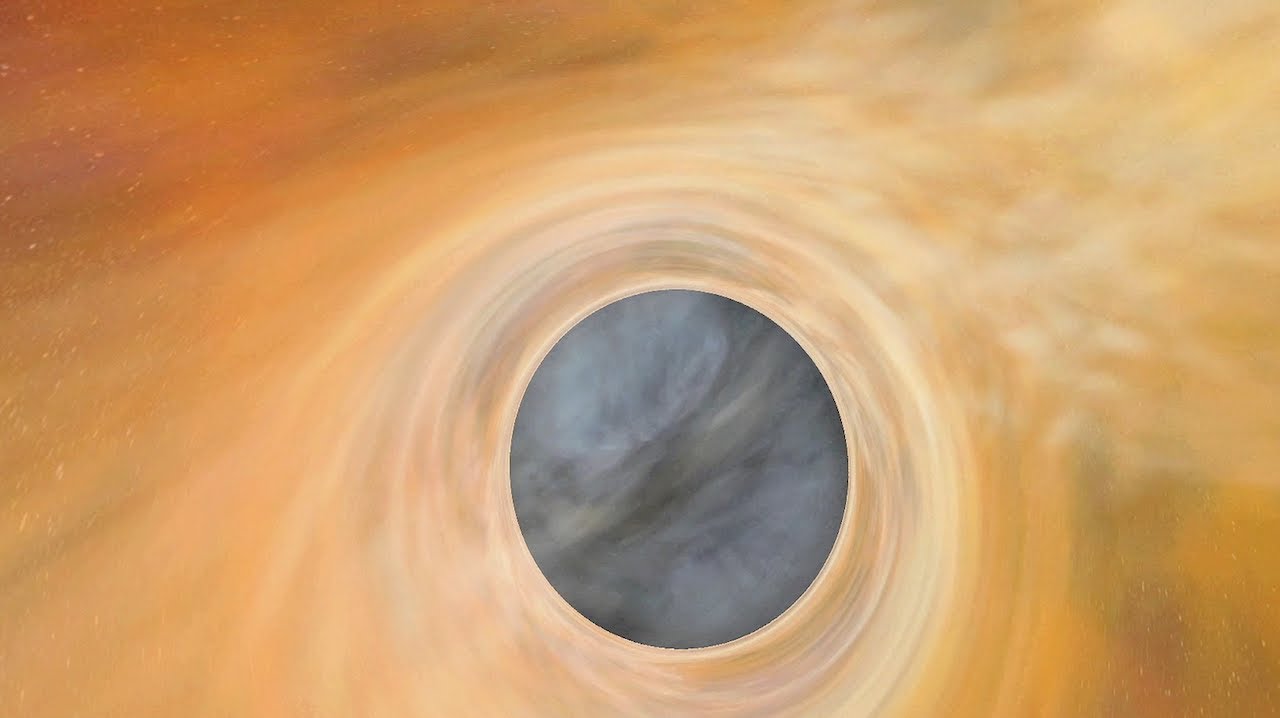
Birth of a Black Hole
Gamma ray bursts, the brightest flashes of light in the universe, puzzled scientists for three decades after spy satellites first detected them in the 1960s. This film follows the physics that finally explained them: a black hole's event horizon dragging space and time along with it, an accretion disk of infalling matter spinning up to light speed, and a pair of jets blasting out from the chaos. A NASA supercomputer simulation reconstructs the final 35 thousandths of a second before a black hole forms, built from a real 40-millisecond burst recorded by the Swift satellite on May 9, 2005, traced to a galaxy 2.6 billion light years away. The film distinguishes two triggers, merging dead stars for short bursts and the collapse of massive stars called collapsars or hypernovae for long ones, showing in each case how a jet punches through surrounding matter fast enough to register on telescopes above Earth's atmosphere. The payoff is practical: these violent births also scatter the heavy elements that later form planets.