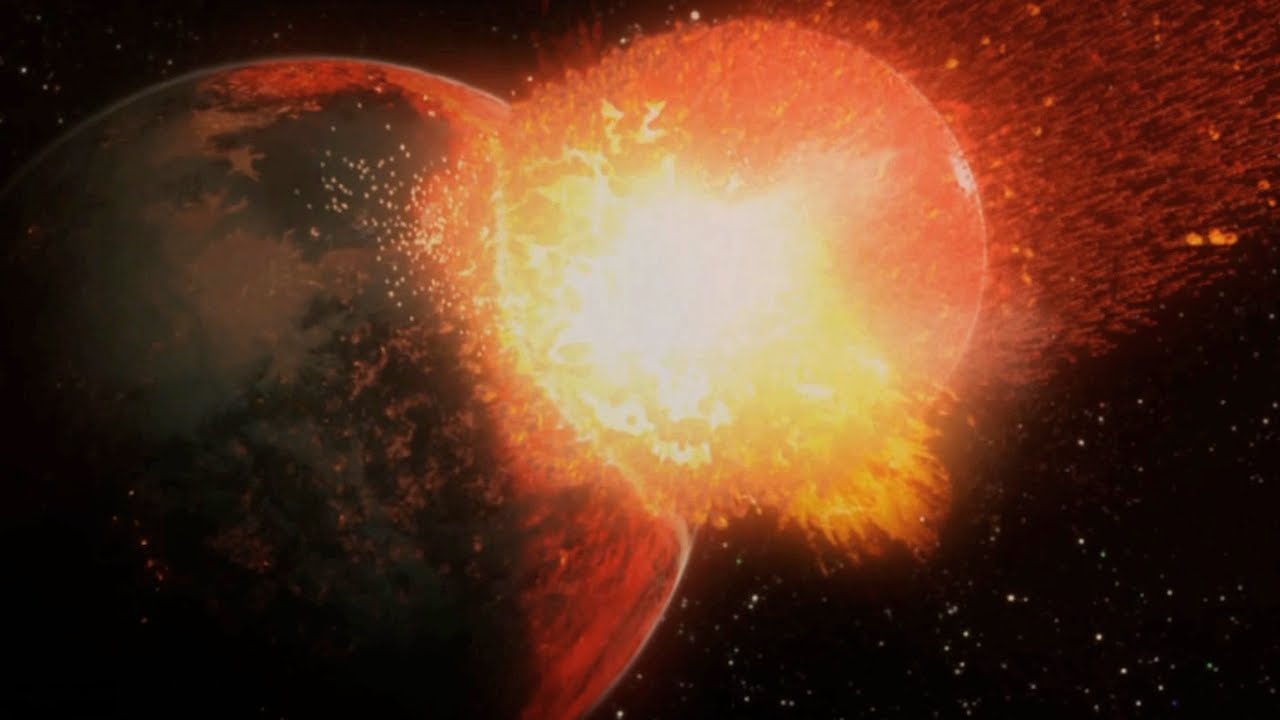
Cosmic Journeys: Birth of the Moon
The Moon's origin sits at the center of this film, traced through the rocks Apollo astronauts hauled back from a landscape with no atmosphere to erase its history. Galileo enters early: looking through a telescope built on Dutch optics, he found mountains and valleys on a body philosophers had insisted was a perfect crystalline sphere, and that observation reopens the question centuries later when NASA gets a close-up look. The film examines concentric-ringed craters like Mare Orientale, imaged by the Lunar Reconnaissance Orbiter, and weighs two explanations for them: melted bedrock versus an impactor striking an already molten surface, the latter feeding the theory that the young Moon was covered in an ocean of magma. Apollo's anorthosite samples, unusually light rock, support the idea that heavier material sank while lighter material floated to the surface. Oxygen isotopes tie those rocks to Earth's own composition, treated here as a kind of blood-type match between the two bodies, while the complete absence of water in the samples closes the film's central puzzle rather than resolving it.