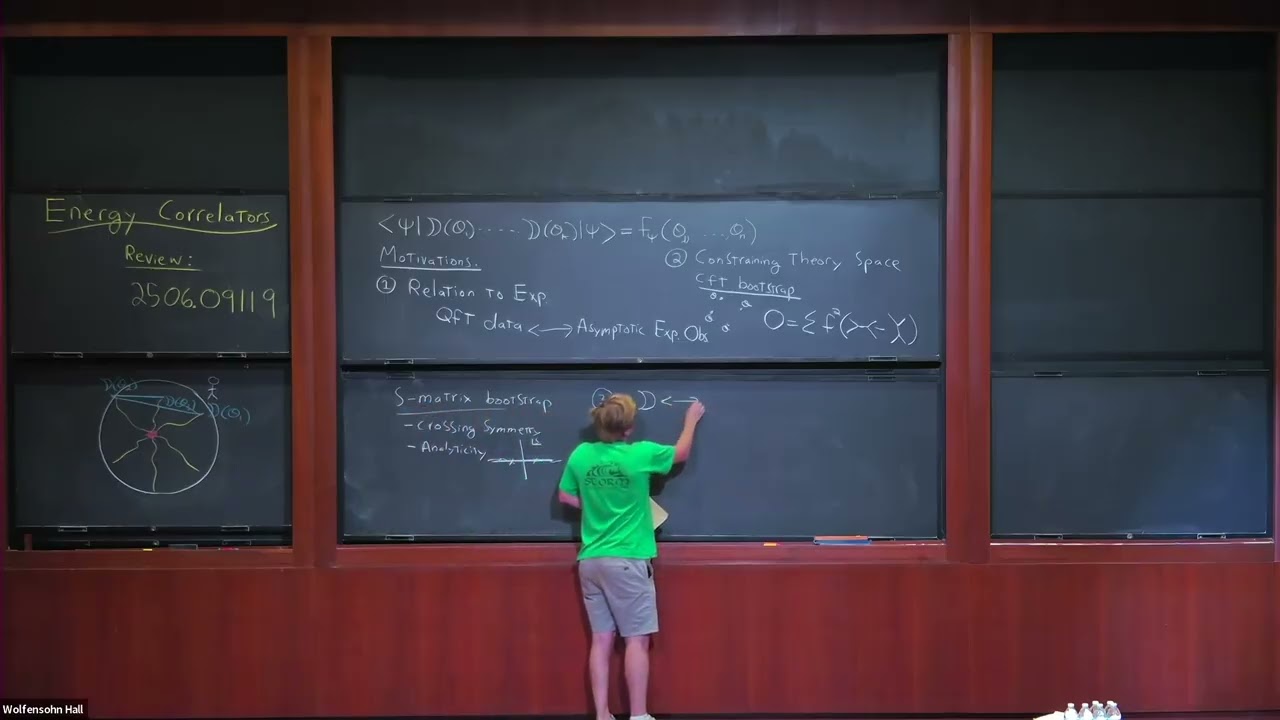
Energy Correlators - Part 1
Ian Moult, a theoretical physicist at Yale University, opens a lecture on energy correlators, the observables built from measuring correlations in energy flow across detectors in high energy collisions. Delivered as part of the Institute for Advanced Study's Prospects in Theoretical Physics program, the talk lays out why these correlators have become a central tool for probing the structure of jets produced at colliders like the LHC. Moult works through the theoretical machinery connecting energy correlators to quantum chromodynamics, showing how their analytic structure encodes information about parton splitting and the transition from quarks and gluons to observed hadrons. As the first part of a longer series, the lecture focuses on setting up the formalism and motivating why these quantities are calculable to high precision, building toward the more advanced applications promised in later sessions. The pace suits an audience already comfortable with quantum field theory, with blackboard-style derivations rather than slides driving the explanation.