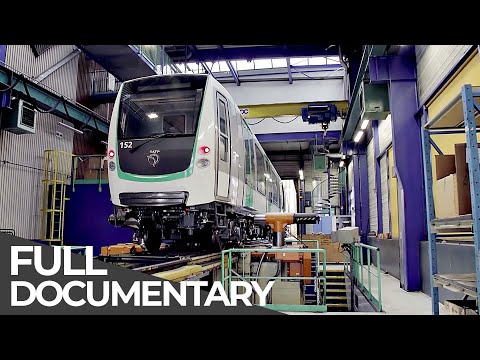
Extreme Constructions: The Paris Metro
Paris's metro turns out to be a catalogue of nineteenth and twentieth century engineering improvisation. Built from a design by Fulgence Bienvenüe, the network now runs 220 kilometers of track through 302 stations on 13 lines, moving more than five million riders a day. The film traces how builders solved problems the city's geology kept throwing at them: wooden tunnel supports for the earliest lines, mechanical boring shields for harder ground, ground-freezing systems to stabilize waterlogged soil, steel viaducts where the line had to run above streets, and submerged chambers sunk into the bed of the Seine itself to carry tracks under the river. Archival material and present-day footage of tunnels, stations, and construction sites sit alongside expert commentary explaining why each method was chosen and what could go wrong with it. The film closes on the metro's modern expansion, the Grand Paris Express, a 200-kilometer network pushing the system well past the old city limits. It is a close look at how a transit system becomes, piece by piece, a solution to its own city's ground.