Generative Solutions for Cosmic Problems
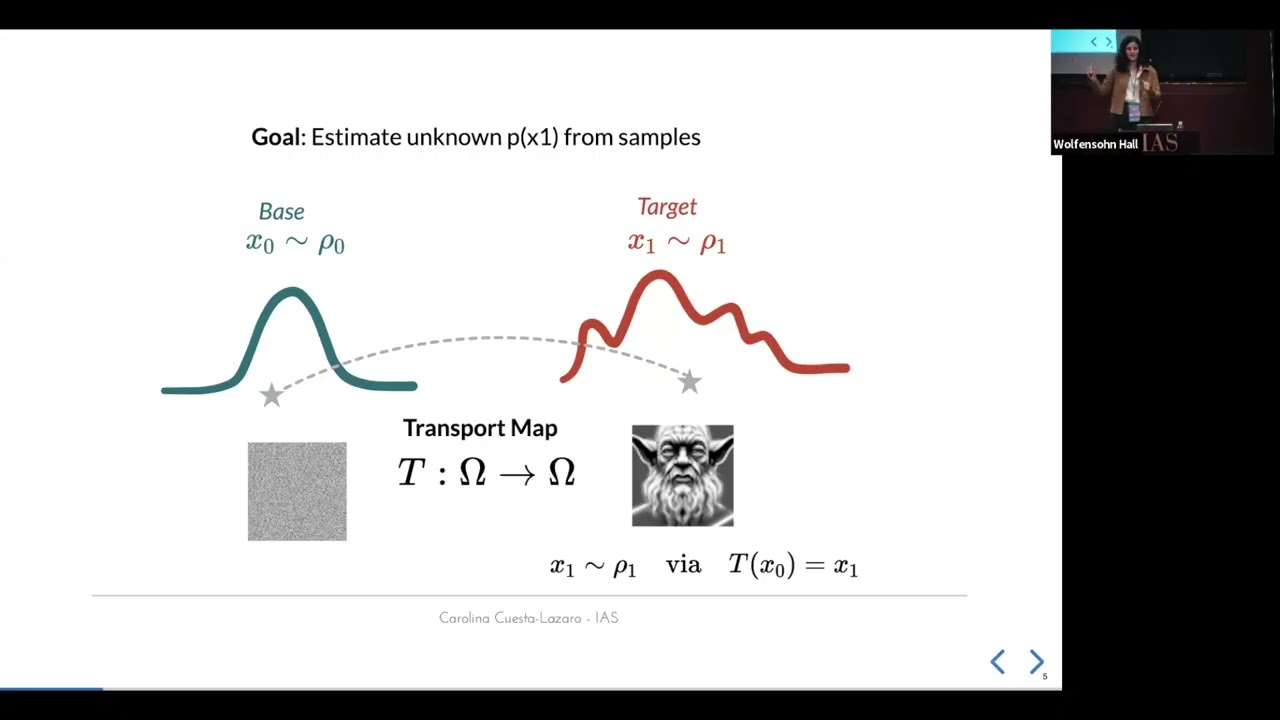
Carolina Cuesta-Lazaro, an astrophysicist at Harvard University, argues that generative machine learning models offer a new way to tackle longstanding problems in cosmology, where simulating the universe's large scale structure is computationally prohibitive at the resolution and scale modern surveys demand. Speaking at the kick-off conference for the Max Planck, Institute for Advanced Study, and Nanyang Technological University joint center, she lays out how generative networks can stand in for expensive physical simulations, producing synthetic dark matter and galaxy distributions fast enough to keep pace with upcoming survey data. The talk sits inside a conference bringing together physicists and data scientists to compare notes on where machine learning is already changing cosmological inference and where it still falls short. Delivered in Wolfensohn Hall at the Institute for Advanced Study, it gives a working astrophysicist's view of generative AI as a practical research tool rather than a buzzword.