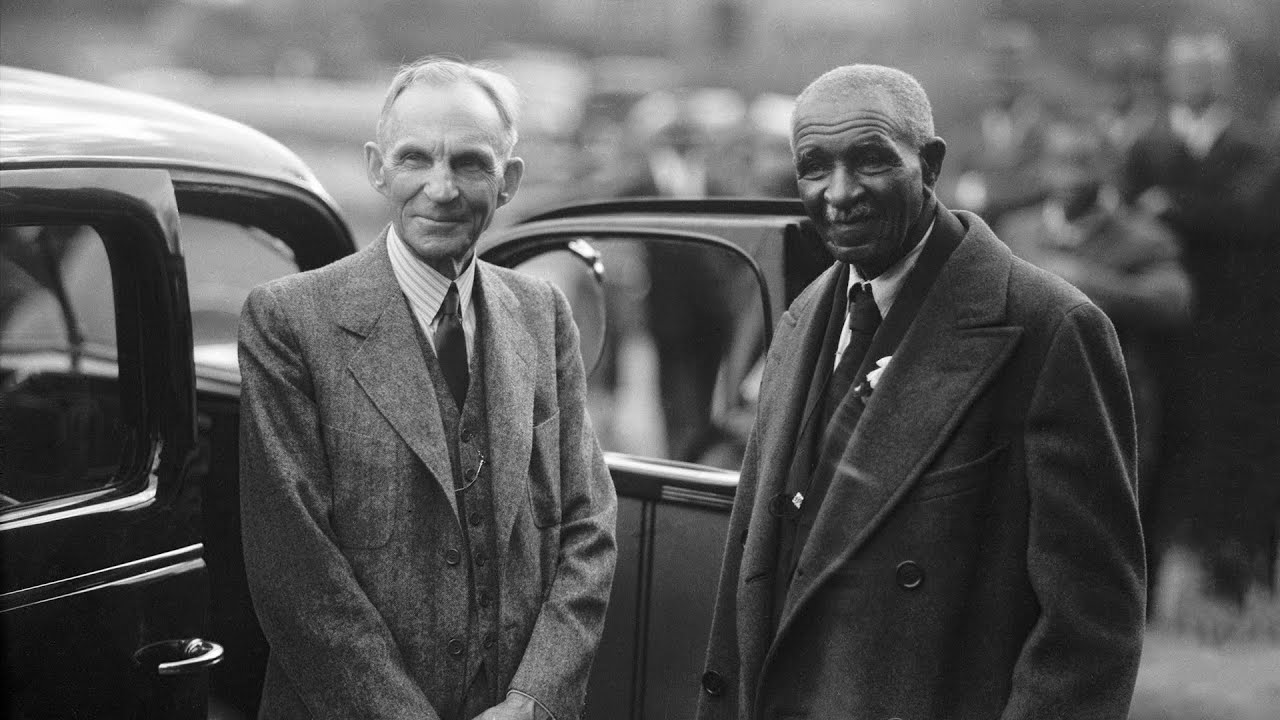
George Washington Carver: An Uncommon Life
Born into slavery in Missouri near the end of the Civil War, George Washington Carver grew up to become one of the most respected scientists of his era, and this film traces that arc through his years at Tuskegee Institute under Booker T. Washington. It covers his agricultural research into peanuts, sweet potatoes, and soybeans, work aimed at giving Southern farmers alternatives to cotton after decades of soil depletion, and his crop rotation methods that reshaped farming practice across the region. Interviews and archival photographs fill in the personal side: a man who painted, played piano, and wove his religious faith into his science, summed up in his own line about doing common things in an uncommon way. The film also sits with the contradictions of his fame, a Black scientist celebrated by white America while segregation held firm around him. It closes with his legacy at Tuskegee and the monument later built in his honor, the first US national monument dedicated to an African American.