Home
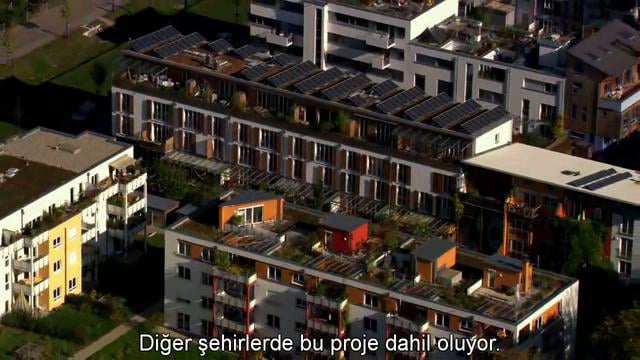
Yann Arthus-Bertrand shoots the entire film from the air, gliding over 54 countries to show what human activity has done to the planet's surface. The camera moves from Kenyan rift valleys to Chinese factory towns, from the Amazon's cleared forests to the drained beds of the Aral Sea, letting altitude turn farmland, cities, and oil fields into patterns that read like circuitry or scar tissue. A single narrator's voice tracks the chain from cheap oil to industrial agriculture to consumption, connecting deforestation, water shortages, and rising emissions as one continuous system rather than separate crises. There is no on-camera interview and no dialogue between people; the argument runs entirely through the sequence of images and the narration layered over them. The final stretch turns to what is already changing: wind farms, reforestation projects, and cities redesigning around renewable energy. The scale of the footage, whole coastlines and deserts framed in a single shot, is the film's real argument for how interconnected the damage is.