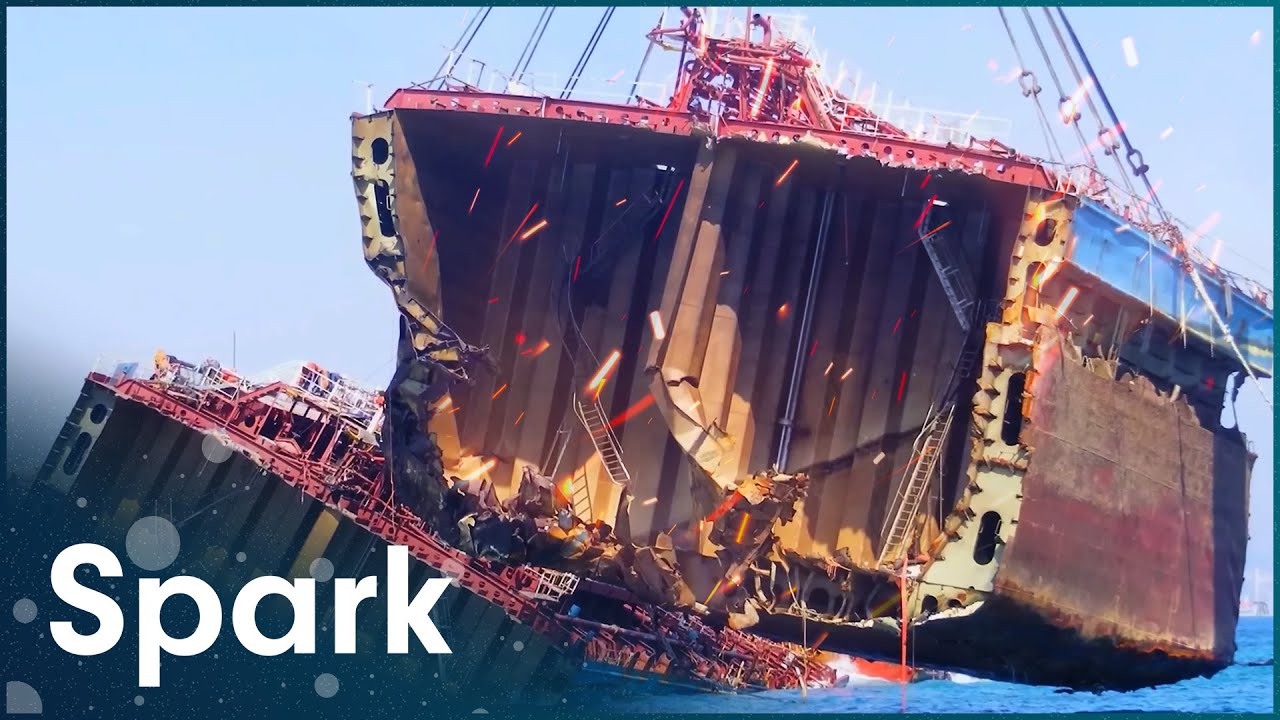
How Do You Saw a Ship in Half? The Science of Chain Cutting
On March 10, 2012, the oil tanker Gelso M runs aground on the volcanic cliffs of Syracuse, Sicily, driven onto the rocks by winds of 110 km/h and 10-meter waves. The film opens with the rescue itself, a sea-to-air operation to lift all 19 crew members off the stricken vessel before it breaks apart on the rocks. From there it follows the 18-month engineering effort required to remove the wreck without spilling its cargo into the Mediterranean, including the unusual solution engineers settle on: cutting the hull apart using massive chains dragged through the steel rather than conventional torches or saws. Footage of the salvage crews, the tanker's twisted position on the cliffs, and the machinery used to haul the chains through the hull carries most of the explanation, with the physics of how a moving chain can saw through metal plate treated as the film's central technical puzzle. It is as much a rescue story as an engineering one, and it stays grounded in the specifics of this single wreck rather than generalizing about salvage work.