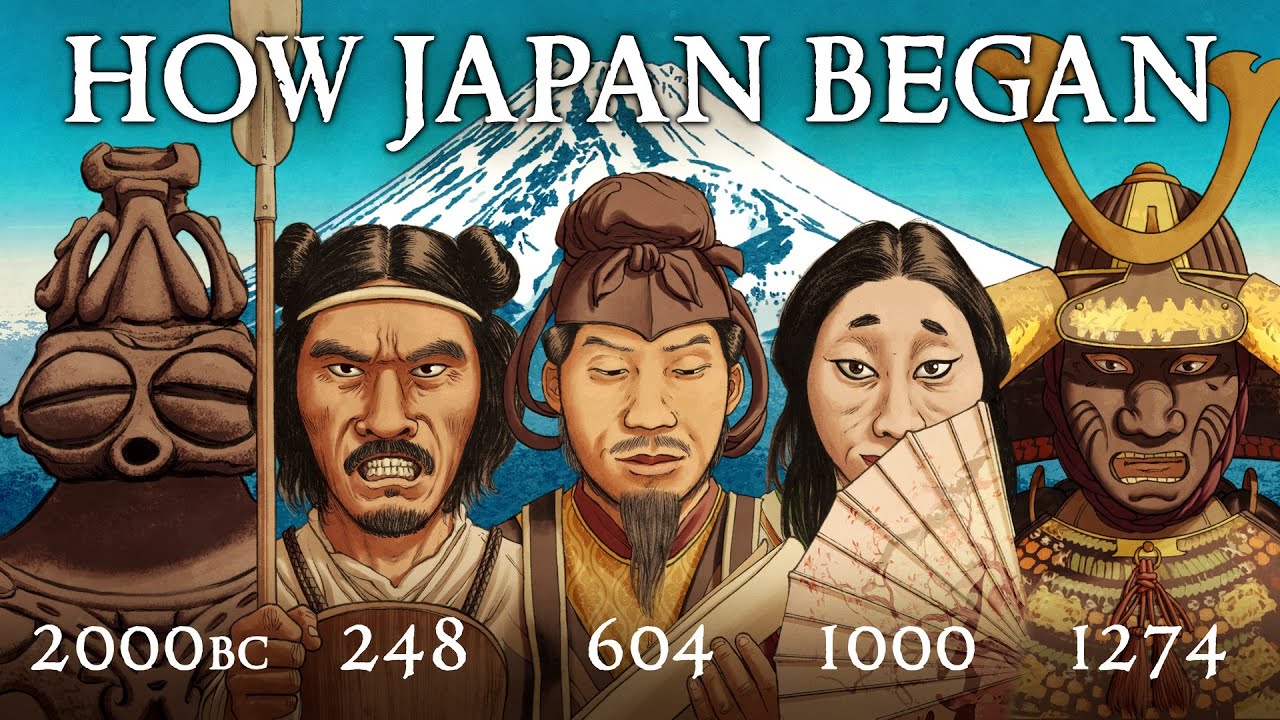
How Japan Began
Japan's early history stretches back thousands of years before samurai and shoguns enter the picture, and this film starts at the beginning, with the Jomon period and its hunter-gatherer communities who left behind cord-marked pottery and coastal shell mounds. It traces the shift into the Yayoi period, when wet-rice farming, bronze, and iron arrive from the Asian mainland and villages grow into something closer to chiefdoms. The film follows the archaeological record through the Kofun period's massive keyhole-shaped burial mounds, built for rulers whose names are mostly lost, toward the formation of a recognizable Japanese state with a court, writing, and Buddhism imported from Korea and China. Rather than leaning on myth or the later imperial chronicles alone, it treats the physical evidence, pottery styles, tomb goods, and settlement patterns, as the real narrators. The result is a straightforward account of how a scattered archipelago of farming and fishing communities became the foundation for the Japan that follows.