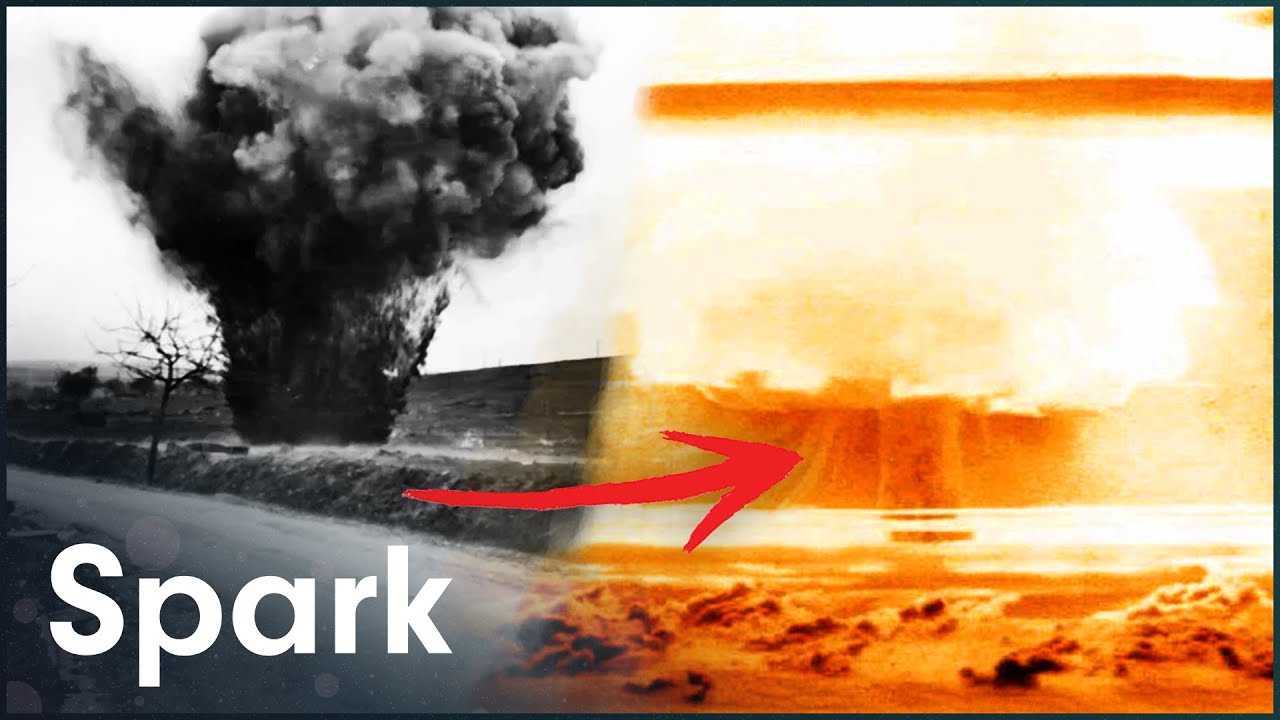
How Much Have Explosives Changed in 1,000 Years?
Gunpowder to nuclear weapons, tracked as a single continuous arms race. The film follows the chemistry and physics of explosions from the inside, using real-world demonstrations to show how a chemical reaction turns into a shockwave and how engineers have spent a millennium trying to make that shockwave bigger, faster, and more controllable. It moves through battlefield innovations that changed the course of wars, from early cannon powder to high explosives developed for twentieth-century combat, before turning to the unsettling modern chapter: how the same science gets repurposed in terrorist bombings. Experts in chemistry and military history explain the mechanics behind each leap forward, and staged experiments let viewers see detonation, blast waves, and material failure up close rather than just hear them described. The through-line is escalation: each advance in explosive power forces a corresponding advance in defense and detection. It closes with the sobering point that the underlying chemistry has barely changed since gunpowder, only humanity's ability to weaponize it.