How the Dutch Got Their Cycling Infrastructure
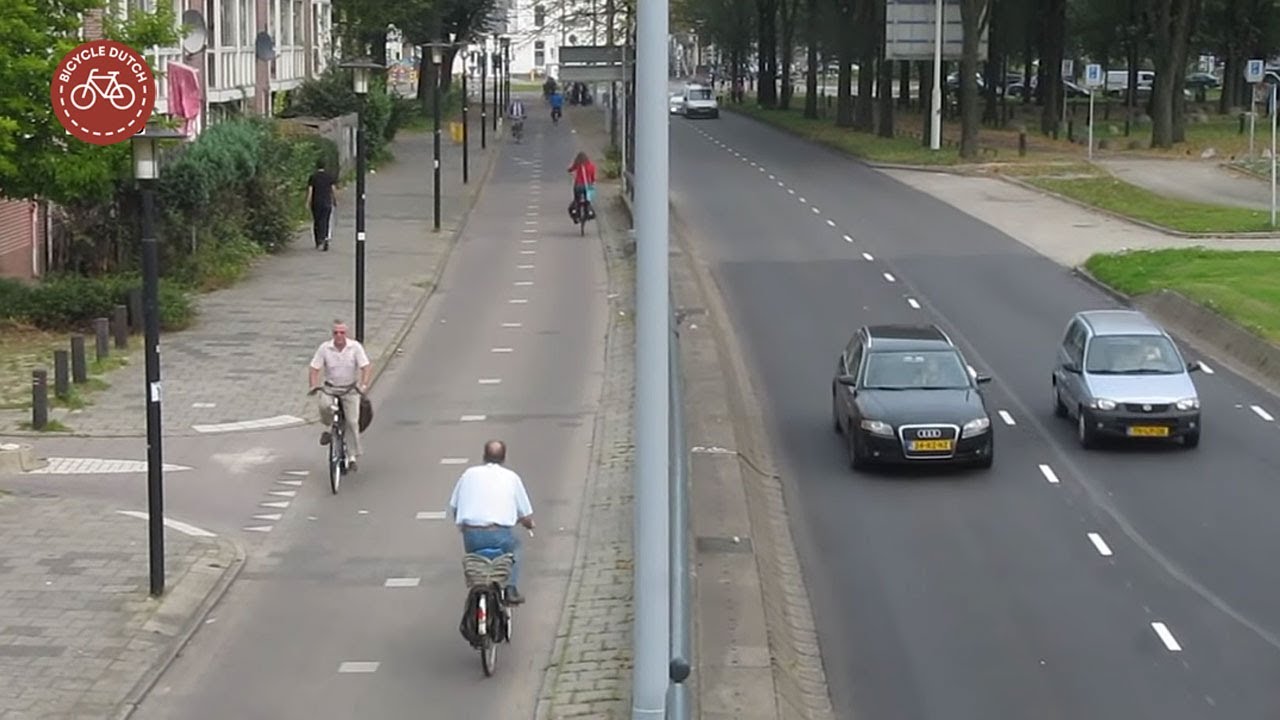
Dutch cities look the way they do today because of choices made after a specific crisis, not because bicycles were always going to win. Mark Wagenbuur's film opens with archival footage from the 1950s and 60s showing Dutch streets clogged with cars exactly like everywhere else in Europe, bicycles pushed to the margins as traffic deaths climbed. The turning point was the 1970s: rising child fatalities sparked the "Stop de Kindermoord" (Stop the Child Murder) protest movement, and the 1973 oil crisis forced a rethink of car dependency just as public pressure was building. Old news clips, protest photos, and planning documents trace how activists and local governments turned that momentum into deliberate policy, separating bike paths from car traffic rather than painting lines on shared roads. The film moves from national politics down to street-level engineering, showing how Amsterdam and other cities rebuilt intersections and residential streets around cyclists. It's a compact history lesson: the infrastructure looks inevitable now, but the film shows it was fought for, city block by city block.