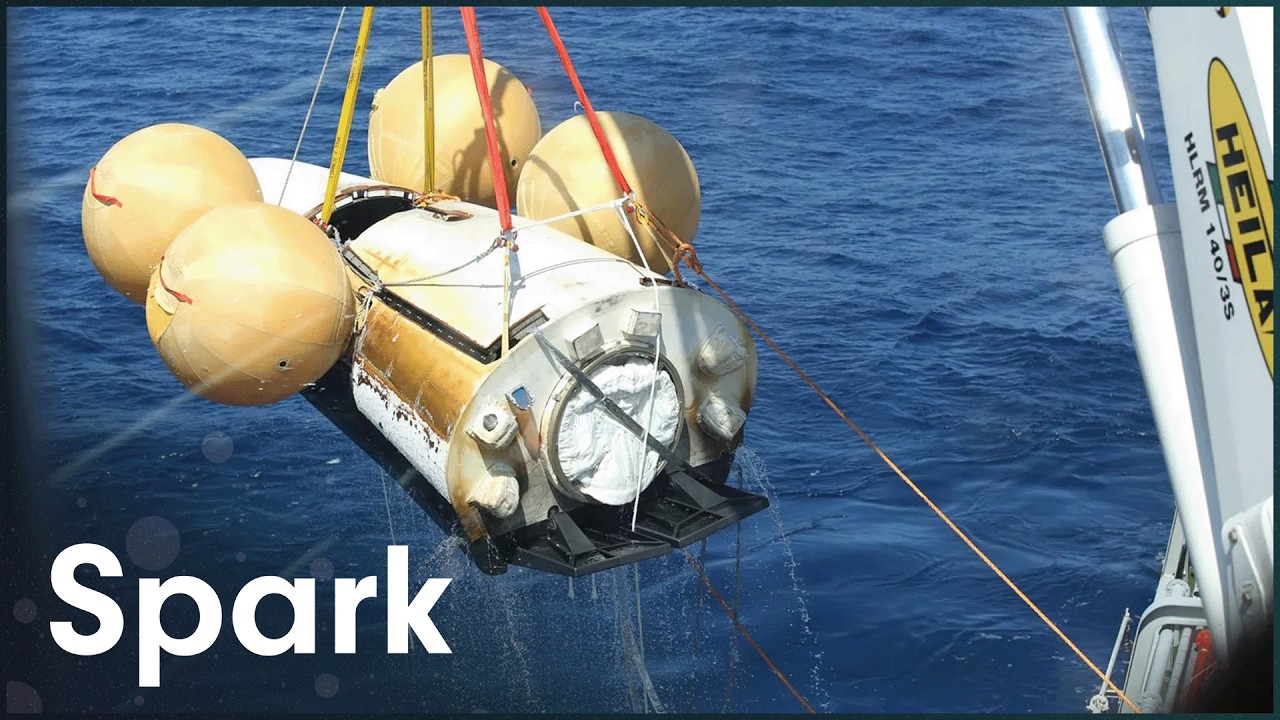
How The IXV Spaceplane Was Recovered From The Ocean
The European Space Agency's Intermediate eXperimental Vehicle, or IXV, is an unmanned lifting-body spaceplane built to test whether a wingless, aerodynamically shaped craft can survive re-entry and steer itself down through the atmosphere at 27,000 km/h. The film follows the engineering behind the 2015 mission, from the thermal protection systems meant to withstand re-entry heat to the guidance software that let the vehicle glide rather than simply fall. After re-entry, IXV splashed down in the Pacific Ocean under parachute, where a recovery ship and dive team had to locate, secure, and haul the vehicle out of the water without damaging the data and hardware needed to evaluate the flight. Engineers and mission personnel explain what the recovery process reveals about the vehicle's performance, and the footage moves between launch preparation, simulated control-room monitoring, and the at-sea retrieval itself. The result is a close look at a step in spaceflight that rarely gets attention: what happens after a spacecraft survives coming home.