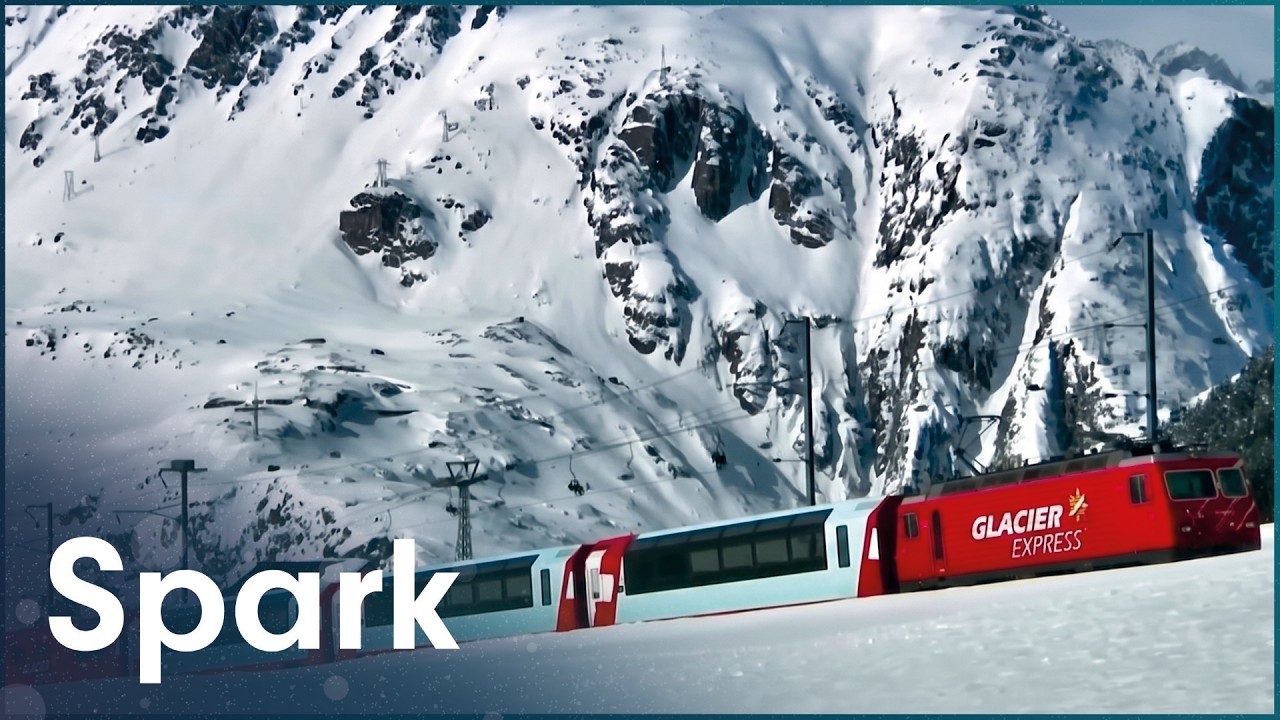
How Trains Climb Heights That Would Derail Cars
Switzerland's Glacier Express covers about 180 miles between Zermatt and St. Moritz, and this film follows the engineers and crews who keep it running through terrain that would strand an ordinary railway. The route climbs to nearly 7,000 feet at the Oberalp Pass, and steeper stretches rely on rack-and-pinion gearing, where a toothed rail under the train meshes with a cog on the locomotive to prevent wheels from simply spinning out on the grade. Cameras go inside mountain depots where crews maintain rolling stock through brutal winters, into avalanche-prone corridors fitted with barriers and warning systems, and through construction footage of tunnels built at a cost of roughly $300 million, engineered to shave hours off journeys while surviving rockfall and shifting ice. Interviews with rail engineers and maintenance staff explain why the Glacier Express earns its reputation as the slowest express train on earth: speed is traded for a route that has to survive conditions no ordinary track could. The film treats the railway less as a tourist attraction than as a sustained engineering problem.