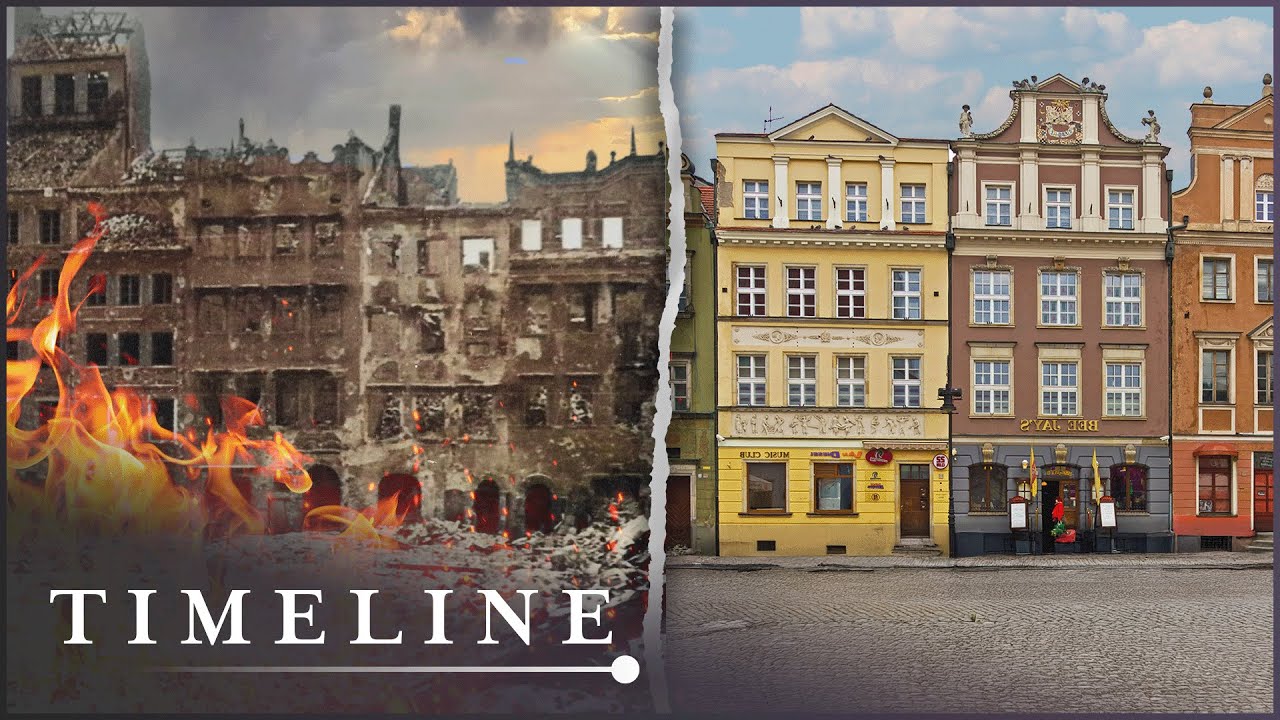
How Warsaw Rebuilt After WW2 Annihilation
German forces leveled Warsaw systematically after the 1944 uprising, reducing the city to rubble and killing hundreds of thousands of its residents. This film follows what came after: a Polish decision to rebuild the Old Town not as a modern replacement but as a reconstruction of what stood there for seven centuries, completed in roughly fifteen years. Central to the story is the Krachinsky family and the hand-drawn master plan they used to guide bricklayers, architects, and planners rebuilding streets and facades from memory, photographs, and surviving fragments. Archival footage of the ruined city sits alongside present-day shots of the Old Town, now a UNESCO World Heritage site, and interviews trace how postwar Poland turned an act of destruction into a deliberate act of civic memory. The film treats the rebuilding as an engineering and logistical problem as much as an emotional one: sourcing materials, matching old techniques, and deciding which version of the city's history to restore. It closes on the paradox at the center of Warsaw's Old Town, a place that looks medieval but is, brick by brick, barely older than the people who built it.