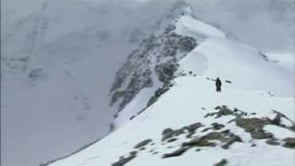
Human, All Too Human: Nietzsche
Friedrich Nietzsche spent his career attacking the comfortable assumptions of nineteenth-century morality, religion, and truth itself, and this film traces that project through his own writing, including the 1878 book that gives the series its title. Philosophers and scholars appear on camera to unpack his central ideas, the will to power and the eternal recurrence, and to place him as an unwitting forerunner of existentialism, a label coined after his death and one Heidegger himself later rejected. Archival photographs and dramatized reenactments fill in the biography: a sickly, increasingly isolated academic who quit his professorship at Basel, wrote in feverish bursts between collapses, and died having seen almost none of his influence. Animation is used to stage his more abstract arguments rather than just illustrate them. The film keeps returning to the gap between the philosopher as a person, lonely and physically ruined, and the philosopher as a body of ideas that outlived him and reshaped twentieth-century thought about meaning, morality, and the self.