Input with Deeply Custom Interfaces
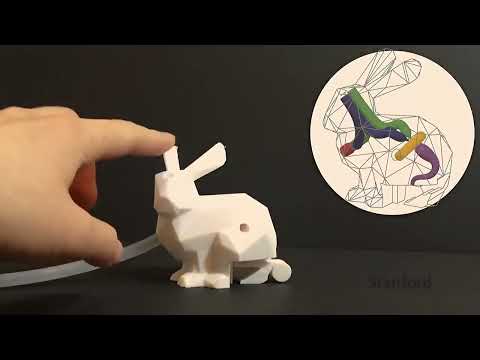
Valkyrie Savage, Assistant Professor at the University of Copenhagen's DIKU Human-Centred Computing Section, argues that physical input devices should be custom fit to a specific user, place, and task rather than mass produced. Speaking in the Stanford CS547 seminar series, she walks through her lab's work on automatically designing input devices informed by anthropometric and biomechanical data, and on 3D printing passive input hardware with fewer fabrication constraints than current methods allow. She describes a wrist-worn sensor that reads human anatomy directly to capture interactions with ordinary objects, eliminating the need for dedicated input hardware altogether. The talk closes with her vision of adaptive objects that detect their own usage patterns and failures in place and adjust themselves over time. Drawing on her Berkeley PhD work with Björn Hartmann on integrated sensing and digital fabrication, Savage connects device design to real anatomical and situational constraints rather than treating the keyboard or mouse as a given.