Is String Theory Unique?
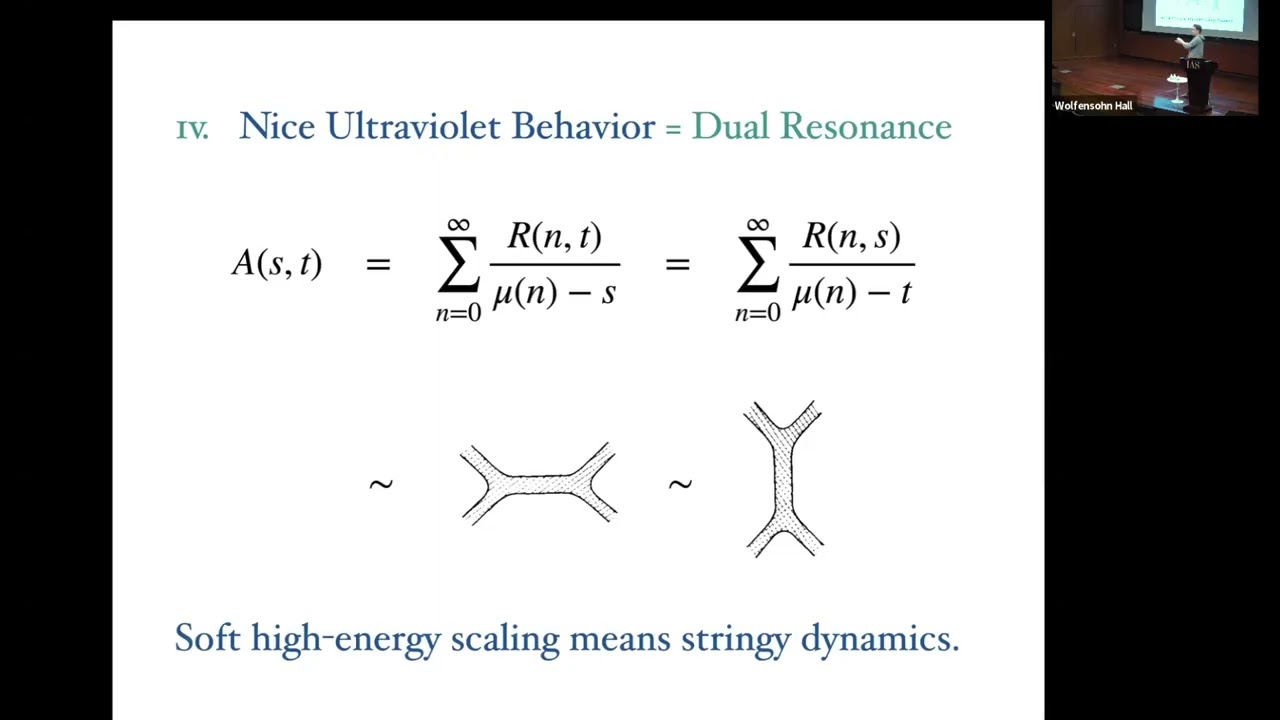
Clifford Cheung, a theoretical physicist at Caltech, asks whether string theory is the only consistent way to unite quantum mechanics and gravity, or merely one option among many hidden possibilities. Recorded at the MPG-IAS-NTU Center kick-off conference in Wolfensohn Hall at the Institute for Advanced Study, the talk works through the logic that makes string theory arise almost inevitably once certain consistency conditions, like the absence of anomalies and the requirement of a finite, unitary scattering amplitude, are imposed on a quantum theory containing gravity. Cheung surveys the landscape of alternative approaches people have tried, from loop quantum gravity to bootstrap methods, and explains why they keep running into the same constraints that string theory satisfies automatically. The talk assumes graduate-level familiarity with quantum field theory and general relativity, and it sits squarely inside the current debate among theorists about whether string theory's structure is forced on us by physical principles or whether it reflects a more contingent, constructed history within the subject.