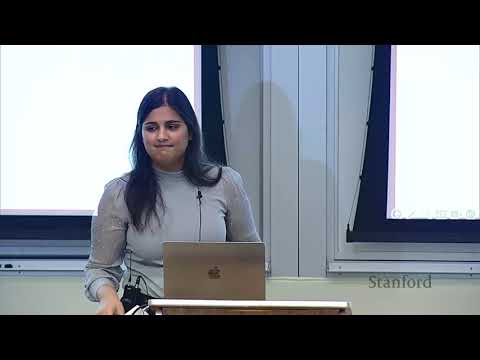
Leveraging Social Theories to Enhance Human-AI Interaction
Harman Kaur, Assistant Professor of Computer Science and Engineering at the University of Minnesota, argues that interpretability tools for AI decision-support systems often fail in practice. Speaking in this Stanford seminar, she explains how exposing people to explanations of complex model reasoning does not make their decisions better, because it exacerbates the bounded nature of human rationality: users fall back on cognitive and social heuristics as shortcuts rather than carefully reasoning through the presented information. Drawing on her work in human-AI interaction within machine learning decision-support contexts, she traces how this socio-technical gap has produced harmful outcomes, including biases against marginalized groups and missed edge cases in sensitive domains. She closes by outlining a research agenda that folds social theory into system design, aiming for human-AI partnerships that exploit genuine complementarity between people and machines while accounting for how incompletely each understands the other.