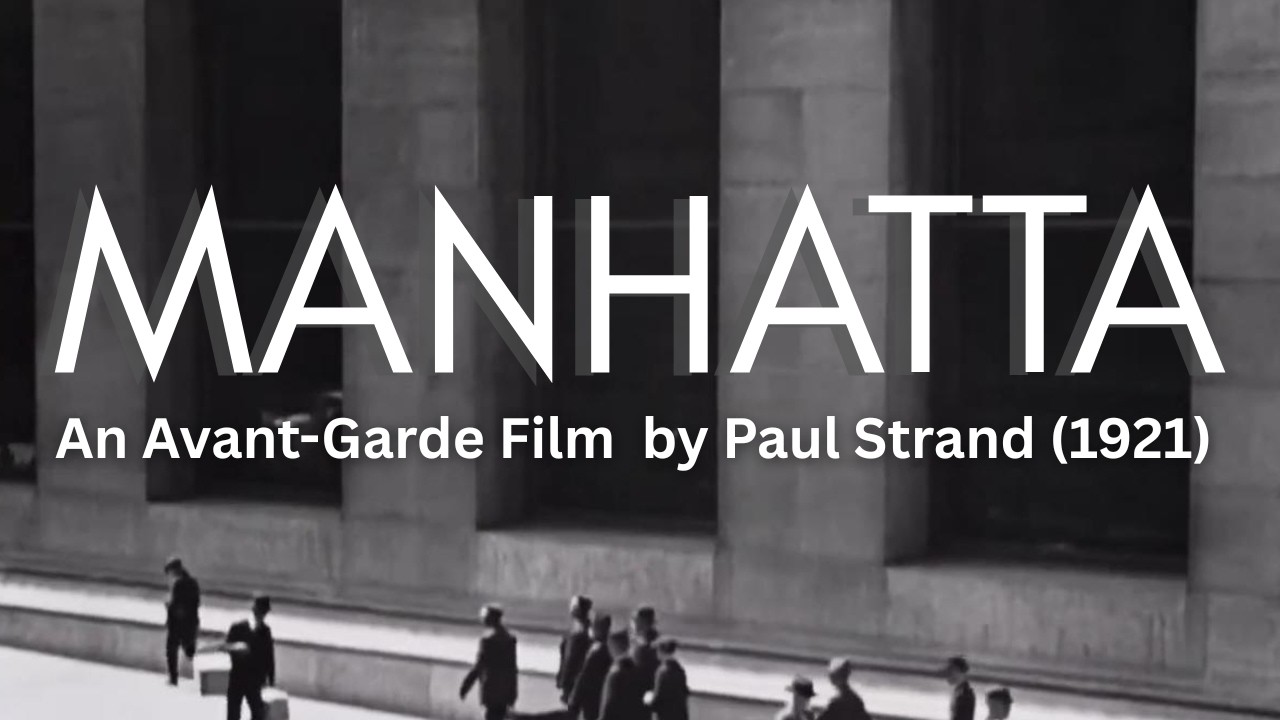
Manhatta
Shot in 1921 by photographer Paul Strand and painter Charles Sheeler, Manhatta is a short study of lower Manhattan built entirely from real footage: ferries crossing the harbor, steam rising between skyscrapers under construction, crowds pouring out of the Staten Island terminal, and steel girders silhouetted against the sky. There is no narrator. Instead, intertitles quote lines from Walt Whitman's poetry, pairing the city's noise and scale with his verses on modern life and mortality. The camera favors high, oblique angles that flatten the skyline into abstract patterns of light and shadow, the same visual language Sheeler and Strand were developing in their still photography at the time. Running only about ten minutes, it is widely credited as the first American avant-garde film and one of the earliest city-symphony documentaries, predating similar European works by several years. The result is less a record of daily life than a formal argument about how a camera can see a city.