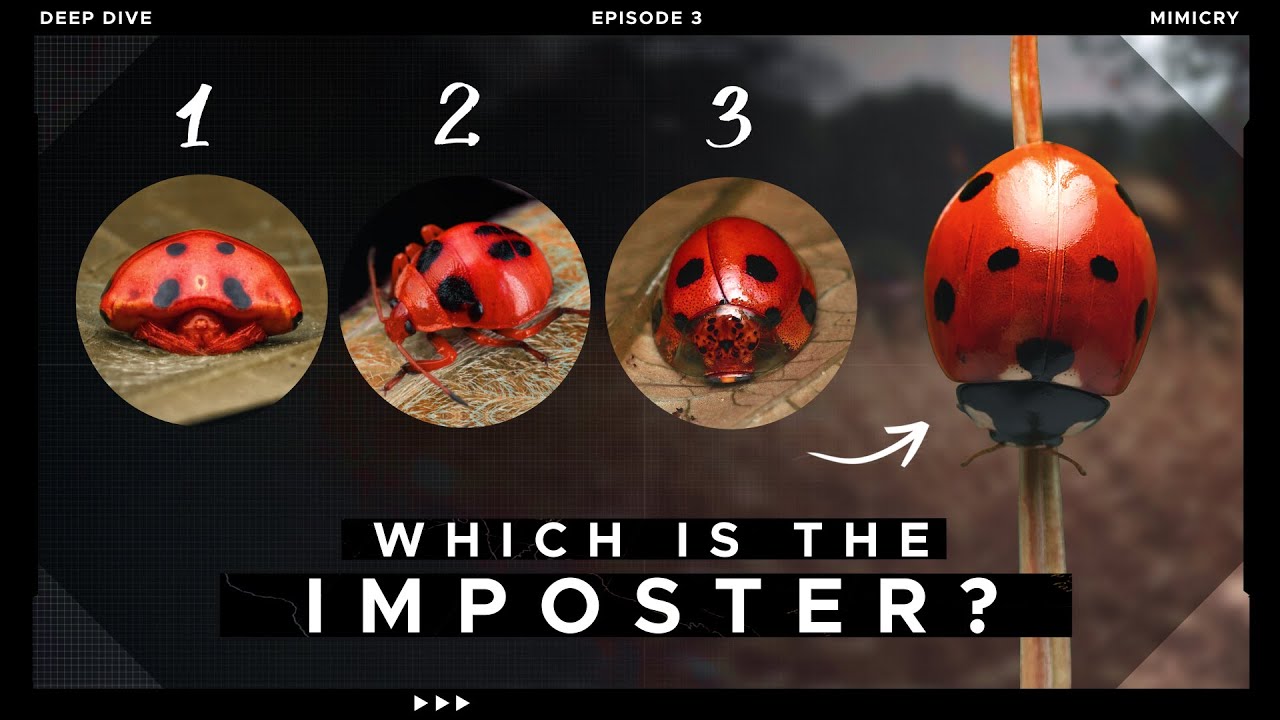
Mimicry
British naturalist Henry Walter Bates spends eleven years in the Amazon starting in the late 1840s, returning to England in 1859 with a collection of more than 14,000 insect species new to science. The film follows his fieldwork and the observation that made him famous beyond taxonomy: harmless species of butterfly, especially among the Ithomiini, evolving to look almost identical to toxic ones that predators avoid. Bates worked out that this resemblance was not coincidence but a survival strategy shaped by natural selection, a finding that reached Charles Darwin and became one of the first solid pieces of field evidence for his theory. The film traces how Bates built this case from thousands of specimens and years of jungle observation, and how the phenomenon now named after him, Batesian mimicry, became a textbook example of evolution acting on appearance rather than just behavior or biology. It is a study of one naturalist's patience turning into a lasting scientific principle.