Monopoly Pricing and Durable Goods, Part 2
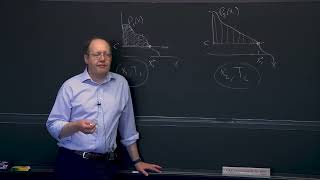
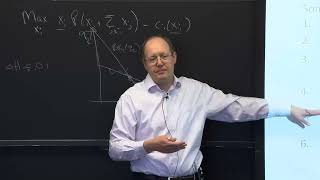
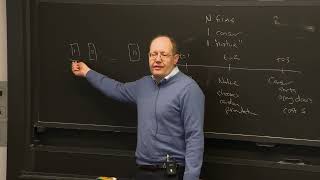
Glenn Ellison continues MIT's graduate course 14.271, Industrial Organization I, with the second half of a session on monopoly pricing and durable goods. He works through monopoly information design, the question of what a seller should let buyers know before they decide to pay, and then turns to durable goods pricing, the problem a monopolist faces when it sells products like cars or books that customers use for years rather than consume immediately. The lecture addresses the Coase conjecture, the idea that a durable goods monopolist without commitment power ends up pricing almost as if it faced competition, since buyers can simply wait for future price cuts. Ellison builds the arguments on the board with formal models, aimed at PhD economics students already familiar with basic monopoly theory. Eighty-two minutes of graduate-level microeconomic theory with no slides, just sustained derivation and discussion.