Neutrino: Measuring the Unexpected
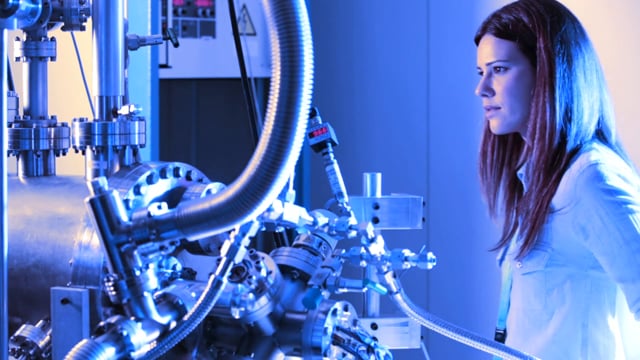
Neutrinos are nearly massless particles that pass through the Earth by the trillions every second, almost never interacting with anything, which makes them both fundamental to physics and maddeningly hard to study. The film tells that story in three parts. The first follows John N. Bahcall's work on the Solar Neutrino Problem, the decades-long mismatch between how many neutrinos the sun should produce and how few detectors on Earth actually caught, and the theoretical fight to explain the gap. The second moves to the IceCube detector buried in the ice at the South Pole, where sensors strung deep below the surface watch for the rare flashes of light a neutrino leaves behind, filmed against the flat white isolation of the Antarctic station itself. The third goes underground to the Canfranc Underground Lab in the Spanish Pyrenees, where researchers use rock overburden to shield instruments from cosmic noise and chase ever finer measurements of neutrino behavior. Together the three sites trace one particle's path from solar theory to polar ice to a mountain tunnel.