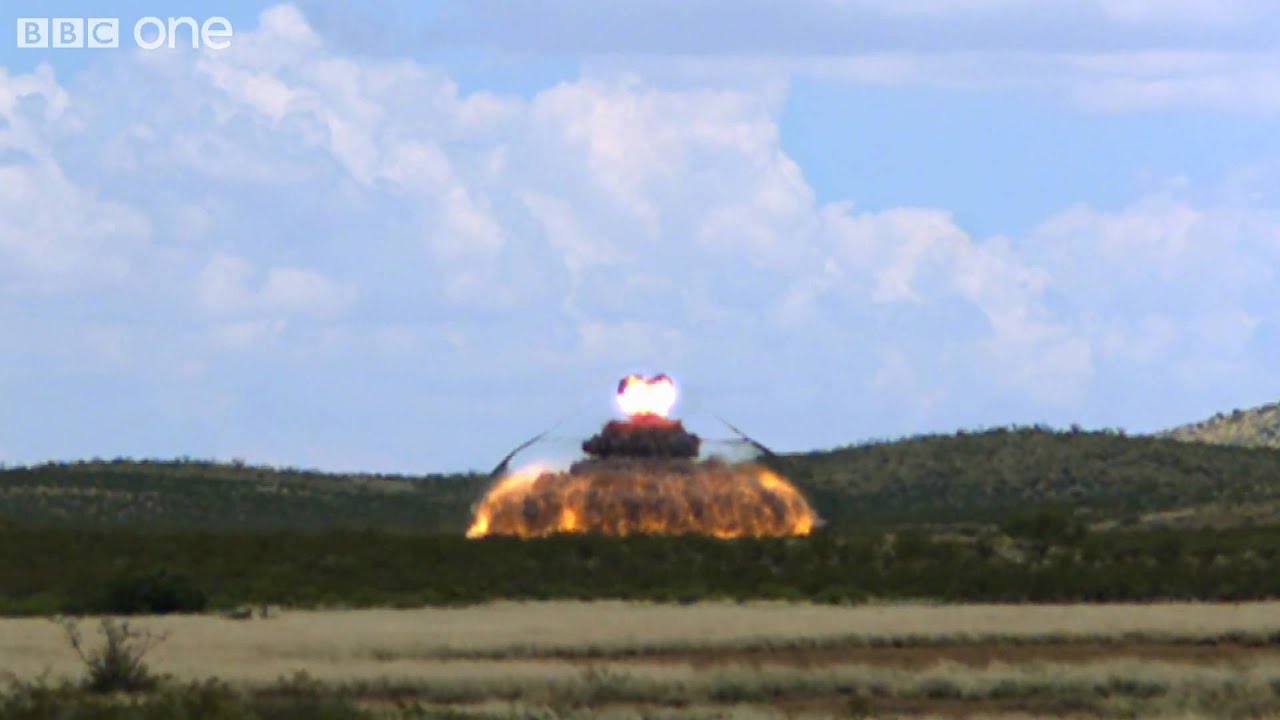
Richard Hammond's Invisible Worlds
Richard Hammond presents a BBC science documentary built around cameras that reveal what human eyes cannot: high-speed rigs that slow a hummingbird's wingbeat to a crawl, thermal imaging that turns a forest into a map of heat, and ultraviolet and electron microscopy that expose patterns on flowers and insects invisible in normal light. The film moves through everyday and natural settings, using each technology to answer a specific question, such as how a gecko's foot grips glass or what a lightning strike looks like at a million frames per second. Hammond acts as an enthusiastic guide rather than a narrator reading facts, reacting to the footage alongside the viewer and talking to the scientists and camera operators who built the rigs. The point throughout is that the world most people experience is a narrow slice of what is actually there, and the imagery, magnetic fields rendered visible, sound waves shown as physical ripples, is the argument. It is a demonstration piece, and the camera work is the reason to watch.