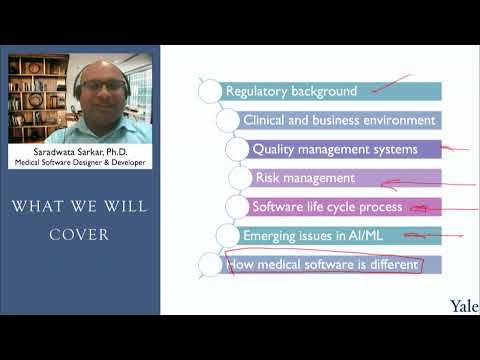
Stop User Errors: Mastering Usability Engineering in Medical Software
A lecture from Yale's Introduction to Medical Software course examines usability engineering as a safeguard against clinician error in medical devices. The instructor explains why poor interface design can translate directly into patient harm, then walks through the international standard IEC 62366 as the governing framework for usability in medical software. The core of the lesson is the iterative design cycle: formative evaluations that shape a user interface during development, and summative evaluations that validate it against real clinical use before release. Examples focus on how designers test whether clinicians can operate a device safely under realistic conditions rather than ideal ones. The lecture stays tightly focused on process and standards rather than case studies, functioning as a concise primer on how regulatory expectations for usability translate into concrete design and testing steps for software used at the bedside.