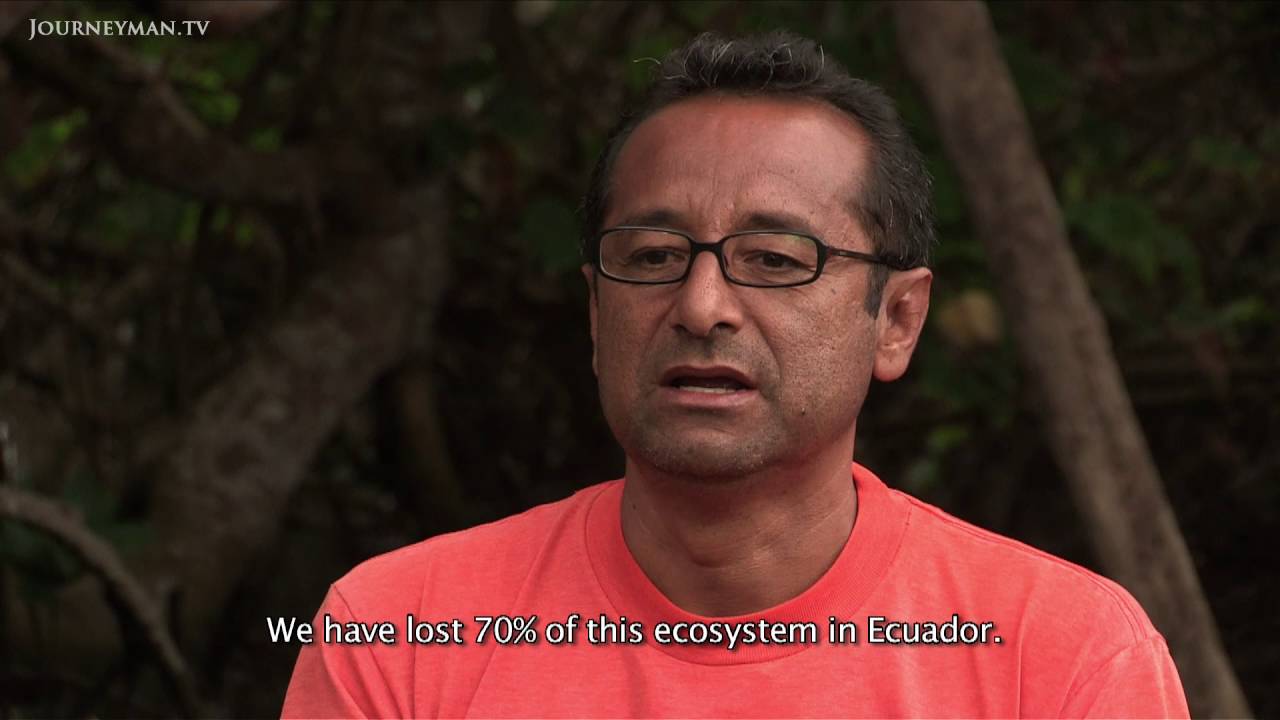
Surviving Shrimp: How Shrimp Farming Has Destroyed Ecuador's Ecosystem
Ecuador's coastline has become one of the world's largest sources of farmed shrimp, an export trade worth more than a billion dollars a year. This film follows the mangrove forests that have been cleared to make way for shrimp ponds, and the fishing communities who once depended on those wetlands for crabs, fish, and a functioning coastline. Local residents and environmental campaigners describe how the mangroves acted as nurseries for marine life and as a buffer against storms, and what happens to a village economy once that buffer is gone. Industry figures and workers explain the pressure to keep expanding production for buyers in the United States and Europe, even as soil salinity rises and yields elsewhere start to fail. The film lays out the trade-off plainly: a profitable global commodity built on the erosion of the ecosystem that made the coast livable in the first place, with the people who live there absorbing most of the cost.