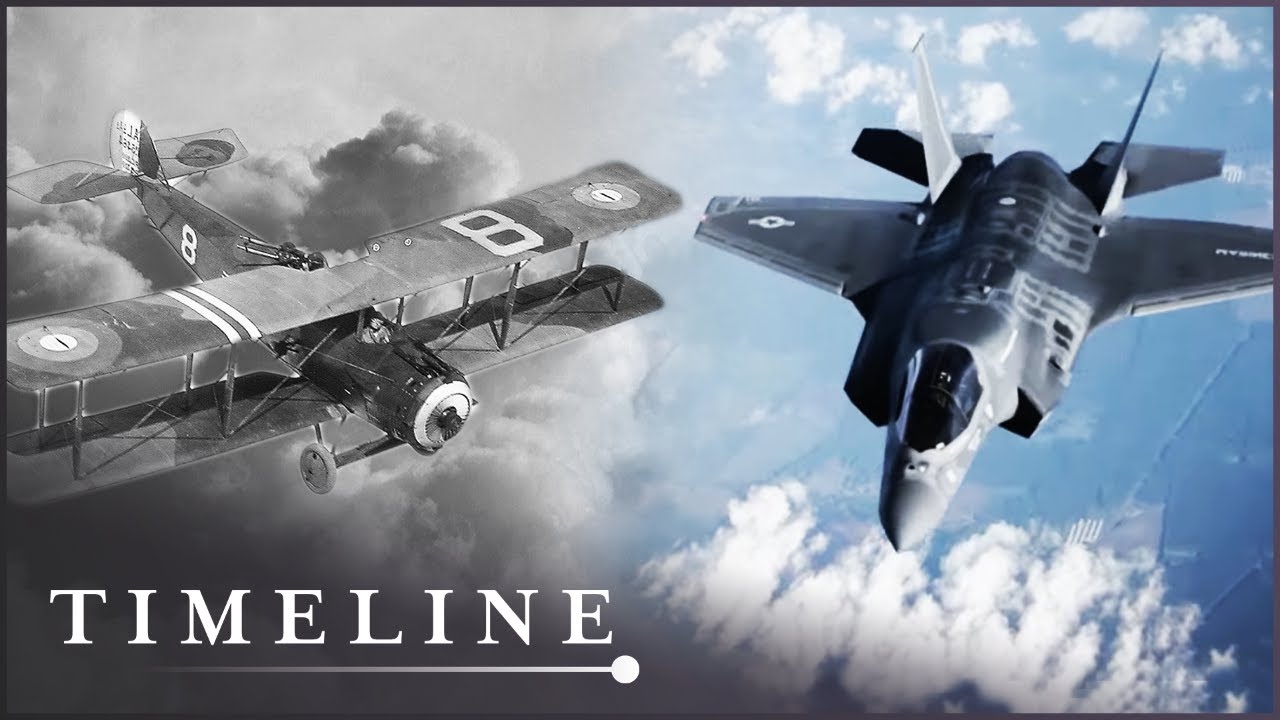
The American Military's History Of Air Superiority
Military aviation gets a full survey here, tracing how air power went from wood-and-canvas biplanes to supersonic jets and attack helicopters. The film starts with the Sopwith Camel, the nimble World War One fighter that helped Allied pilots wrestle back control of the skies, then moves through the interwar years and into the jet age. Archival footage and expert commentary cover the Harrier Jump Jet's ability to take off and land vertically, a design that changed how commanders thought about airfields and battlefield flexibility, and the F-16's role as a fast, adaptable multirole fighter built for dogfights and ground support alike. The Apache helicopter gets its own segment as a dedicated tank-killer built around sensors and firepower rather than speed. Rather than treating these aircraft as isolated machines, the film links each one to the doctrine and battlefield problem it was built to solve, building a chronological argument about how the United States pursued and held air superiority across nearly a century of conflict.