The Black Hole Explorer: Tracing an Edge of the Visible Universe
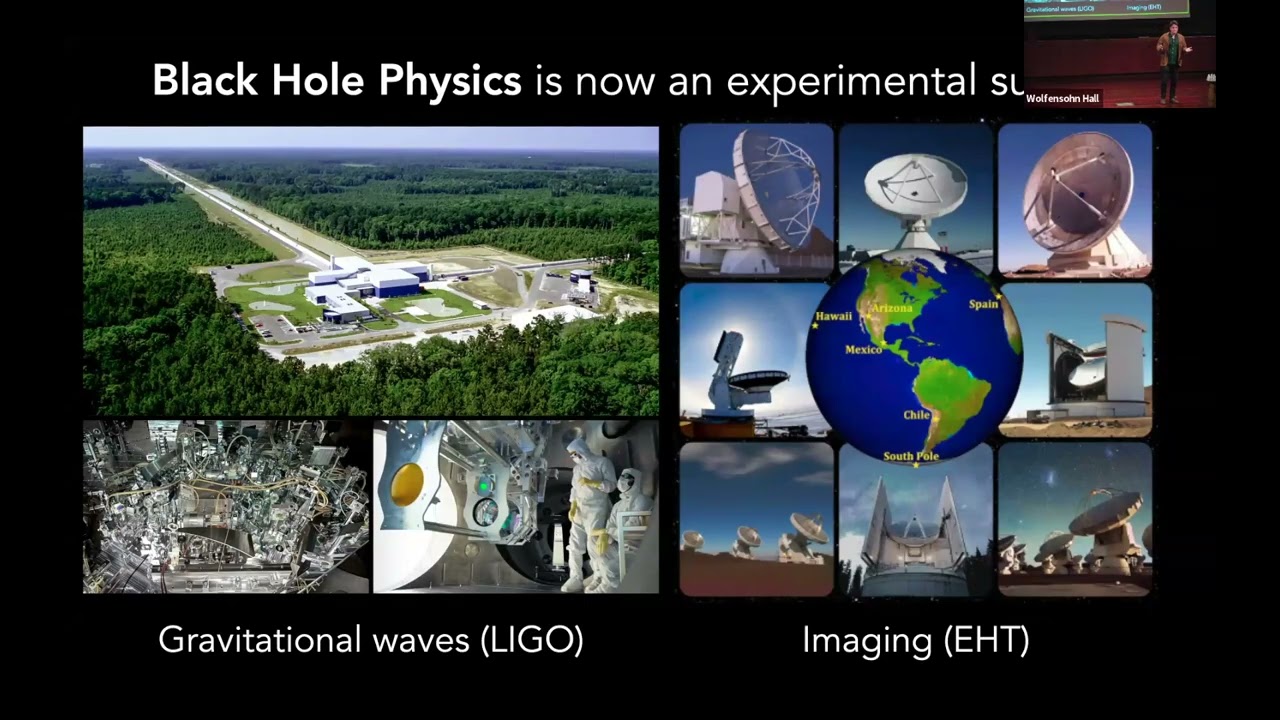
Alex Lupsasca, a physicist at Vanderbilt University, presents this talk at the Institute for Advanced Study's workshop on black holes, held in Wolfensohn Hall as part of a program linking theoretical predictions to observational tests. He discusses the Black Hole Explorer concept, a proposed space mission meant to extend the work of the Event Horizon Telescope by imaging the photon ring, the thin band of light bent around a black hole's shadow that encodes sharp tests of general relativity. Lupsasca walks through why this ring is such a clean theoretical target, what resolution and baseline a space-based interferometer would need to resolve it, and what such images could reveal about spacetime geometry near the event horizon that ground-based arrays cannot currently capture. The talk sits at the boundary of theory and instrument design, aimed at an audience of working physicists rather than a general one, and runs just under an hour.