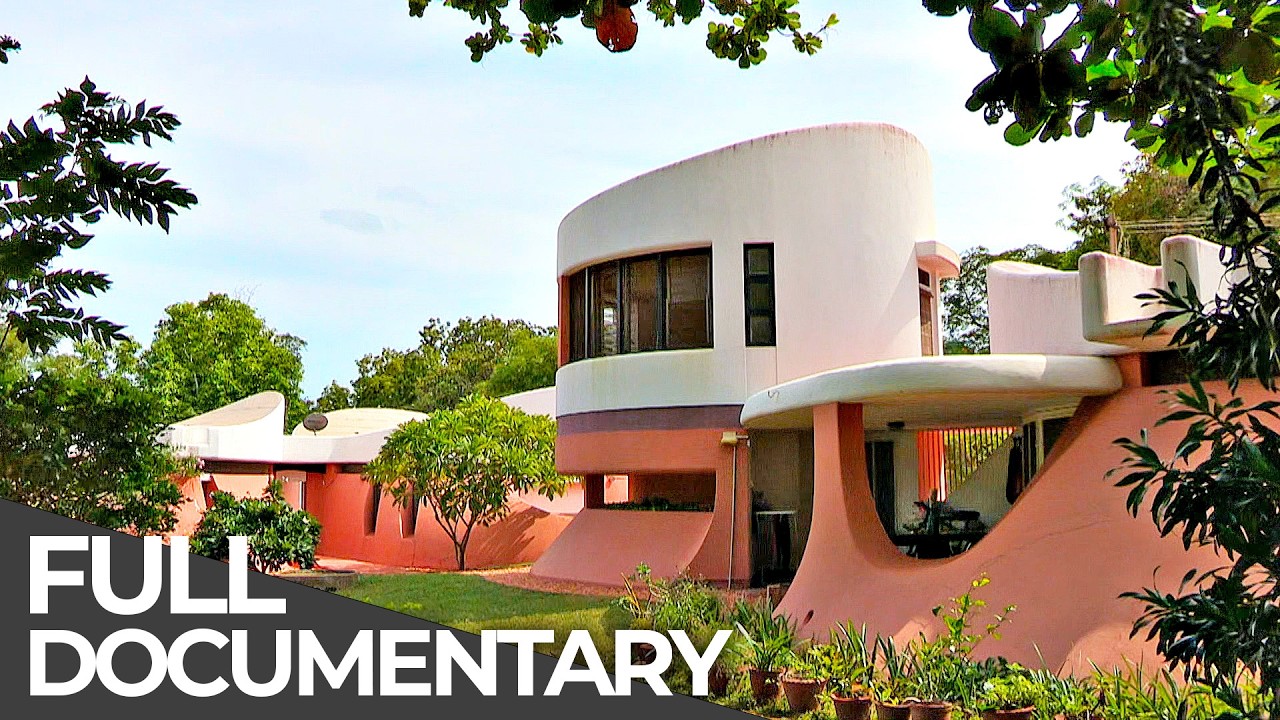
The City That Tried to Build a Perfect World: Habitats of the World - India
Auroville sits in southern India, a community founded in the 1960s on the belief that architecture could reshape how people live together rather than just shelter them. The film walks through its distinctive houses, communal gardens, and the golden geodesic sphere of the Matrimandir at its center, letting residents describe daily life inside a town built around cooperation instead of ownership. Interviews cover how homes were designed to encourage shared space over private isolation, and how the settlement's layout, radiating outward from the Matrimandir, was meant to embody unity as a physical plan rather than just an idea. The film treats Auroville as a real, functioning place rather than a curiosity, showing markets, workshops, and the ordinary friction of communal decision-making alongside the utopian vision. It is part of a Habitats of the World series looking at experimental communities and living arrangements around the globe, and it stays close to the residents' own accounts of what the experiment has actually produced, decades on.