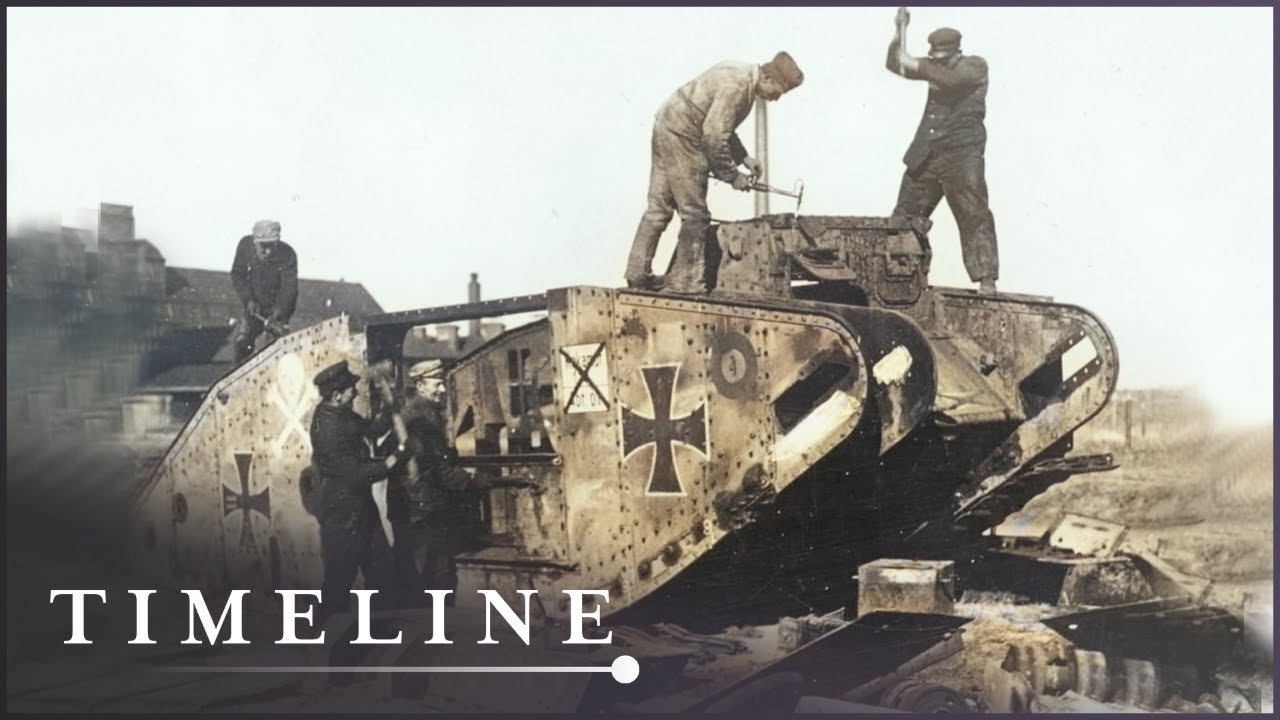
The Forced Labor Behind The WW1 Munitions Race
By 1916, the First World War had become a contest of factories as much as armies, and this episode of The Great War In Numbers looks at what the belligerent empires did to keep artillery shells and rifle cartridges flowing. Archival photographs and footage trace how shortages of labor pushed governments toward coercion, from colonial subjects conscripted into munitions work to prisoners of war and occupied populations put to work in mines and armament plants. Narration lays out the production numbers behind the war's material demands, showing how the scale of shelling on the Western Front outstripped anything armies had planned for and forced a scramble for workers as much as raw materials. The film treats forced labor not as a footnote but as a structural feature of industrialized war, connecting factory output figures to the human cost of sustaining them. It sits within a numbers-driven series, using statistics as the spine for a story about exploitation on the industrial home front.