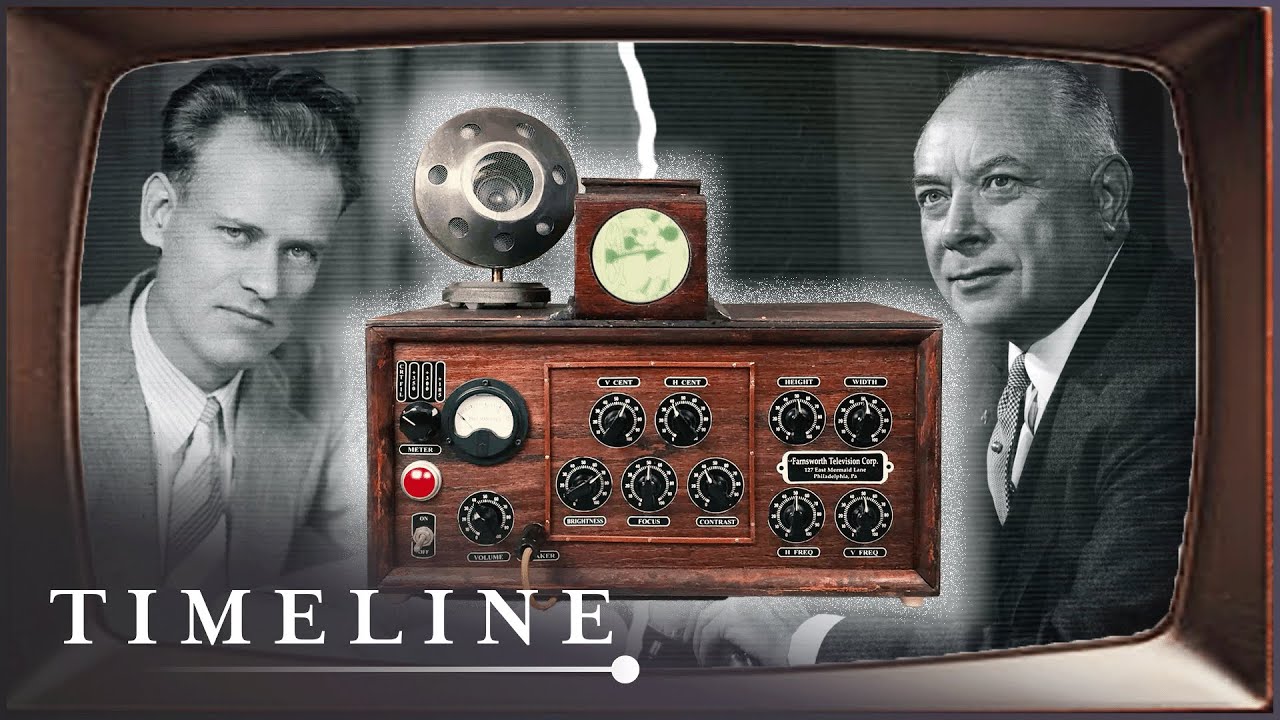
The Man Who Invented TV (And The Radio Mogul Who Stole His Glory)
Philo Farnsworth was a fourteen-year-old Idaho farm boy when he sketched the electronic scanning system that would become television, years before anyone built a working set. This film traces his race against David Sarnoff, the RCA chief who saw the same technology as a commercial empire waiting to be seized. Farnsworth files his patents first, builds working prototypes in a San Francisco lab, and eventually wins the legal fight when RCA challenges his claims in court. But winning the patent battle is not the same as winning the industry: Sarnoff's manufacturing scale, broadcast infrastructure, and legal war chest let RCA roll television out to American living rooms under its own name, leaving Farnsworth's role a footnote for decades. Archival photographs, period footage, and historian interviews reconstruct both men's labs, courtrooms, and boardrooms, laying out a clear timeline of who invented what and who profited from it. The film's real interest is the gap between invention and ownership, and how thoroughly money can rewrite credit.