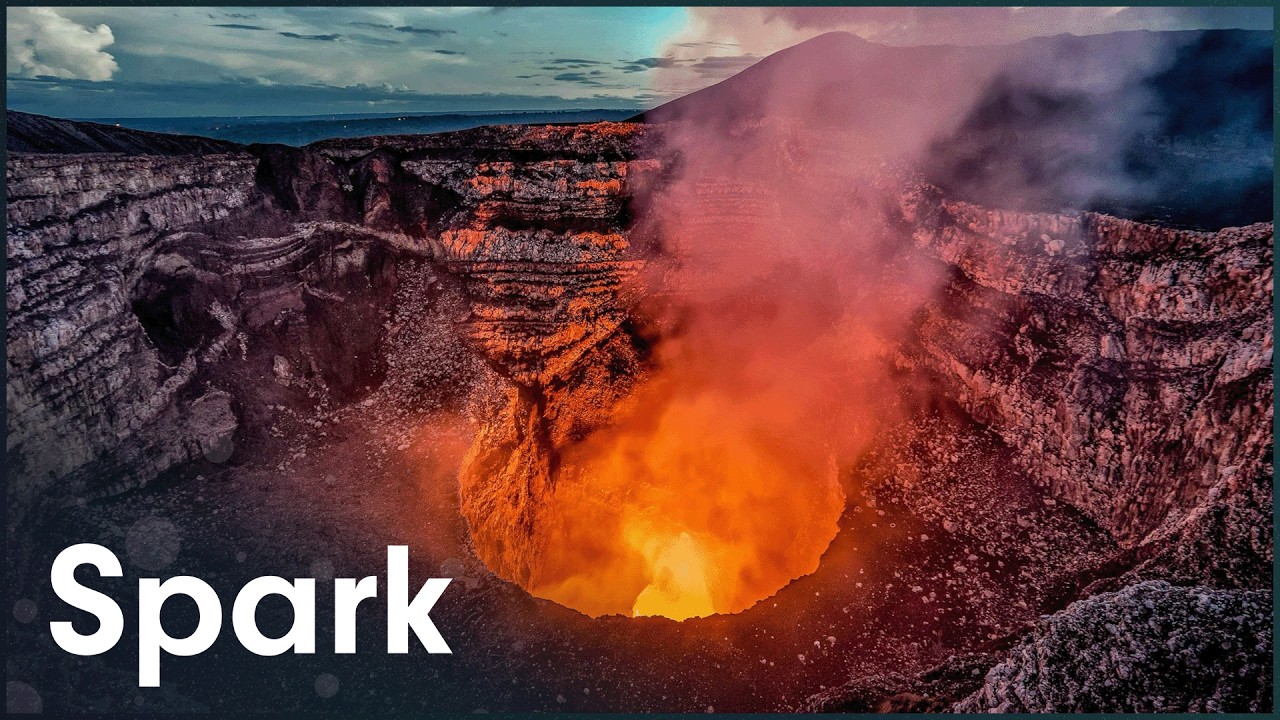
The Masaya Volcano: Inside the "Mouth of Hell"
Masaya, in western Nicaragua, has been erupting in some form for over 30,000 years, and this film treats it as an ecosystem as much as a geological hazard. Cameras follow the volcano through its extremes: a crater lake of molten lava visible from an overlook, sulfuric gas plumes that Spanish colonists once called the "Gateway to Hell," and ash fields that look lunar until jungle reclaims them a few hundred meters away. The wildlife sequences carry the film, including Aztec parakeets that nest directly in the crater's toxic gas clouds, seemingly immune to fumes lethal to most animals, and vampire bats roosting deep in ancient lava tube systems. The human story runs alongside it: roughly 200,000 people live within sight of the crater, farming and building on volcanic soil that periodically kills them, and the film examines how communities read the mountain's moods and keep living there anyway. It is a nature-and-earth-science profile of one volcano rather than a survey, built on location footage and narration rather than talking-head geology lectures.