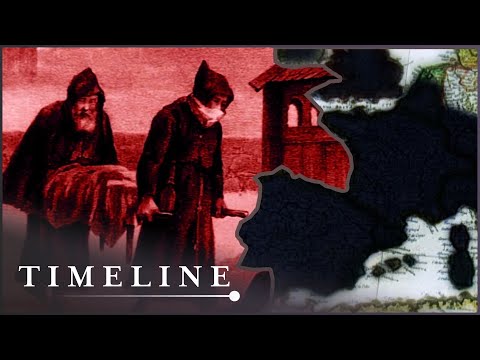
The Plague: How Did One Village Survive?
In 1665, the Derbyshire village of Eyam sealed itself off after the plague arrived in a bundle of cloth, choosing quarantine over flight to stop the disease spreading further. Geneticist Steven O'Brien investigates why some villagers survived repeated exposure while neighbors died, tracing the trail to a genetic mutation, CCR5-delta 32, found in descendants of survivors centuries later. The film moves between the village's graves and boundary stones, where families like the Mompessons lost nearly everyone, and modern laboratories where O'Brien explains how the same mutation blocks HIV from entering human cells. Historians lay out the village's self-imposed isolation and the toll it took, while scientists walk through the genetic detective work connecting a seventeenth-century outbreak to twenty-first-century AIDS research. Reenactments and archival-style village footage anchor the historical half, while interviews carry the science. The result links a single Peak District community's sacrifice directly to a modern medical question: how a mutation born of one plague might help fight another disease entirely.