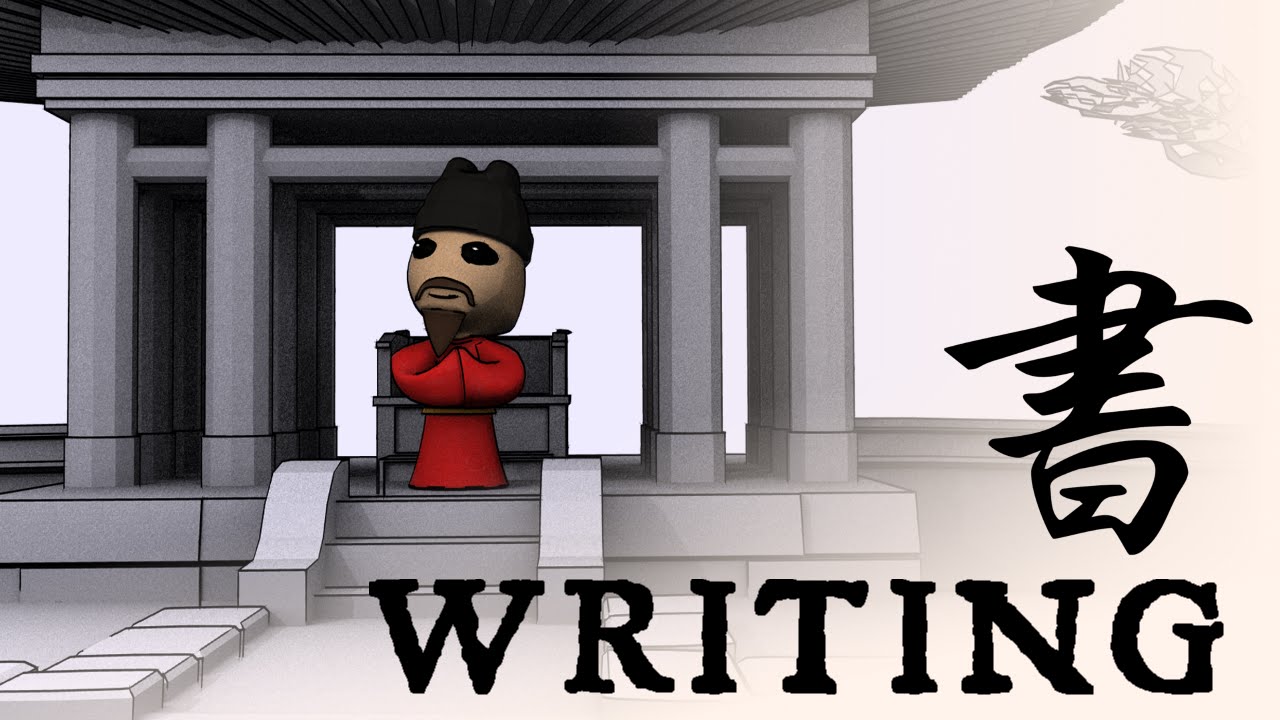
Thoth’s Pill: An Animated History of Writing
Writing did not arrive as one invention but as a string of separate solutions, and this animated film traces that string from Sumerian cuneiform and Egyptian hieroglyphs through Chinese characters, the Phoenician consonant alphabet, Greek and Roman letters, and on to Korean hangul and Japanese kana. It opens with the Egyptian myth of the god Thoth presenting writing to King Thamus, staged as a direct translation of Plato's Phaedrus, where Thamus worries the invention will weaken memory rather than serve it. From there the animation shows the actual mechanics scripts use to represent sound and meaning: pictographs turning into logograms, rebus writing borrowing a picture for its sound rather than its sense, determinatives clarifying ambiguous signs, and acrophony stripping symbols down into alphabets. Maya and Aztec glyphs, Ge'ez, Devanagari, and the Arabic and Hebrew abjads all get their own segment. The whole history plays out as hand-drawn animation with no interviews or narration beyond the framing myth, letting each script's evolution unfold visually on screen.