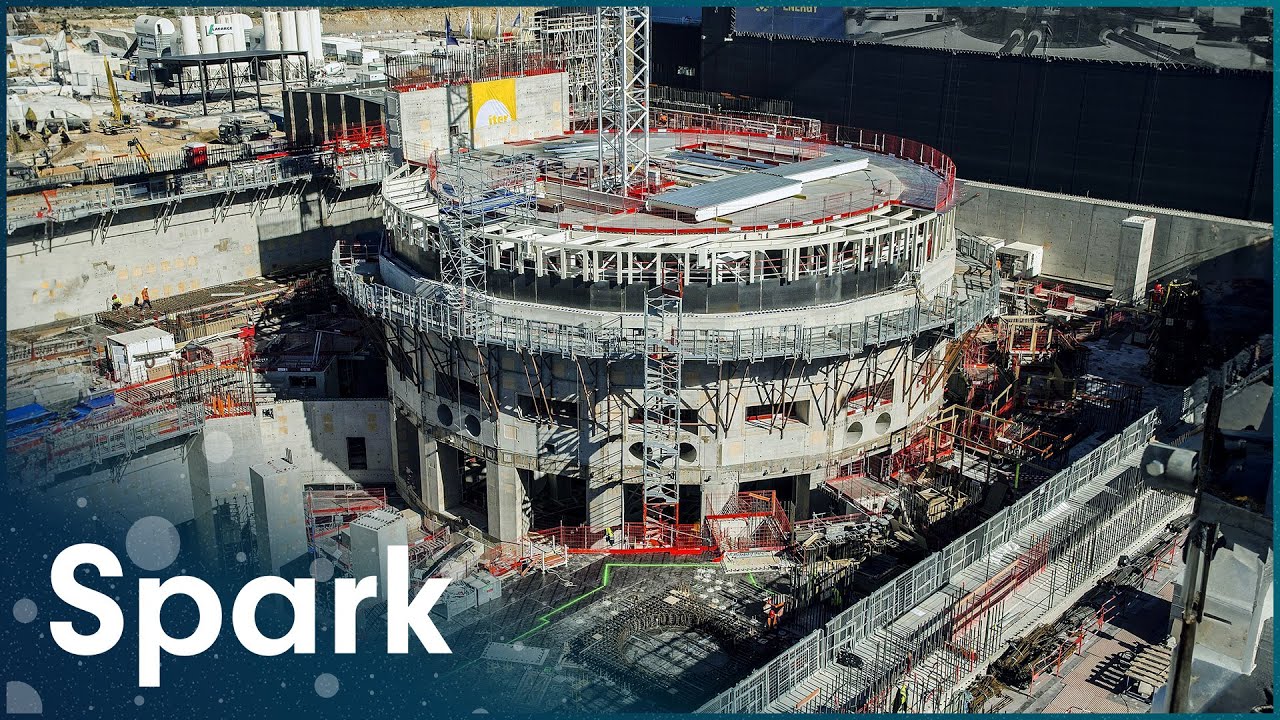
Transporting a 23,000 Ton Magnet Over 100km
In southern France, engineers are assembling ITER, the largest nuclear fusion reactor ever attempted, a joint project of 35 nations designed to prove that fusion power can be produced at scale. The film follows one of the project's most extreme logistics problems: moving components weighing thousands of tons, including a 23,000-ton magnet assembly, across roads never built for such loads. Convoys creep through French countryside at walking pace, engineers reinforce bridges and roads along the route, and cranes lower components with millimeter tolerances into the reactor's containment structure known as the tokamak. Interviews with the people running the build explain why fusion, unlike fission, produces no long-lived radioactive waste and why ITER's magnets need to be this large to contain a plasma hotter than the sun's core. The footage moves between the construction site, the fabrication plants building individual parts, and the control rooms coordinating the transport, giving a ground-level view of what building a reactor meant to answer the world's energy problem actually requires.