Unveiling a Fast (and Furious) Early Universe with JWST
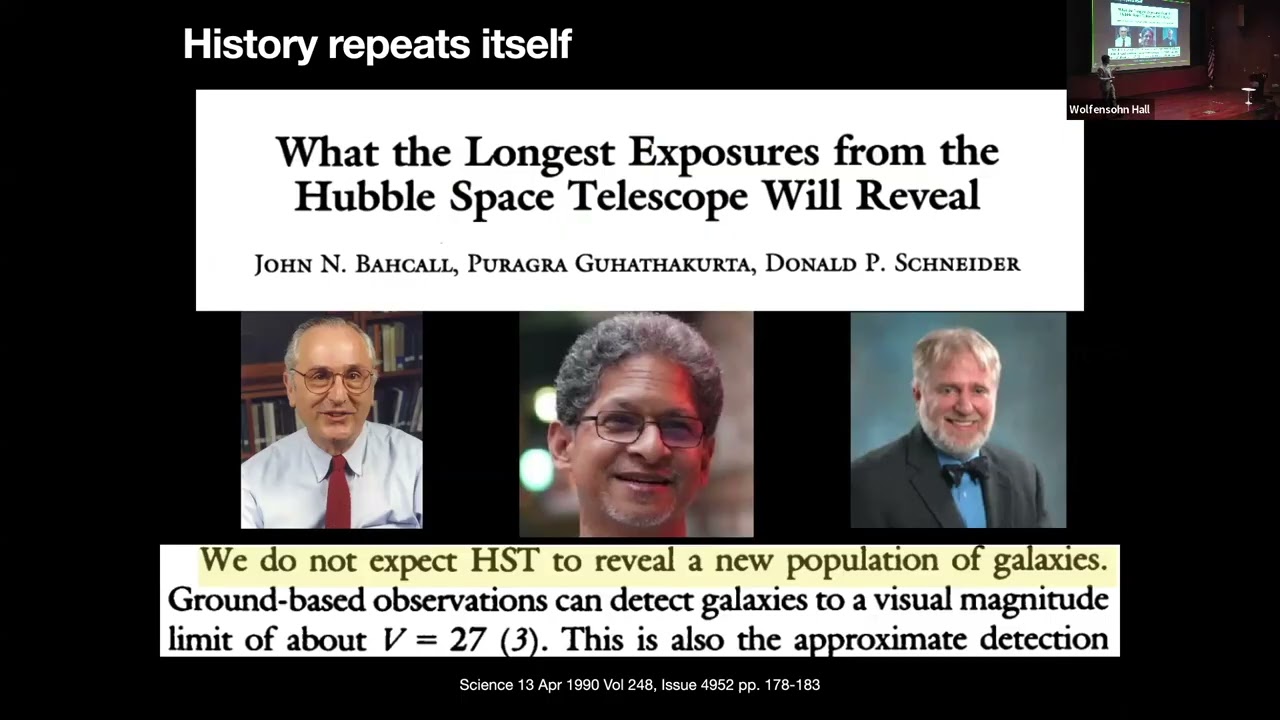
Astrophysicist Julian Muñoz, of the University of Texas at Austin, argues that early JWST data is straining standard models of galaxy formation. Speaking at the Institute for Advanced Study and Princeton Joint Astrophysics Colloquium in Wolfensohn Hall, Muñoz opens with the surprising abundance of galaxies observed at redshift greater than 9, within a few hundred million years of the Big Bang, more than models predicted, and walks through how cosmological clustering measurements can distinguish between competing explanations. He then presents new empirical measurements of star-formation burstiness and how it scales with galaxy mass, proposing this variability as a key piece of the overabundance puzzle. The talk closes on friction between JWST-era reionization measurements and other probes, the cosmic microwave background and the Lyman-alpha forest, and what that tension might mean for recent dark energy results from the DESI survey. The talk is technical and aimed at an astrophysics audience, moving through observational data, modeling assumptions, and open tensions in current cosmology.