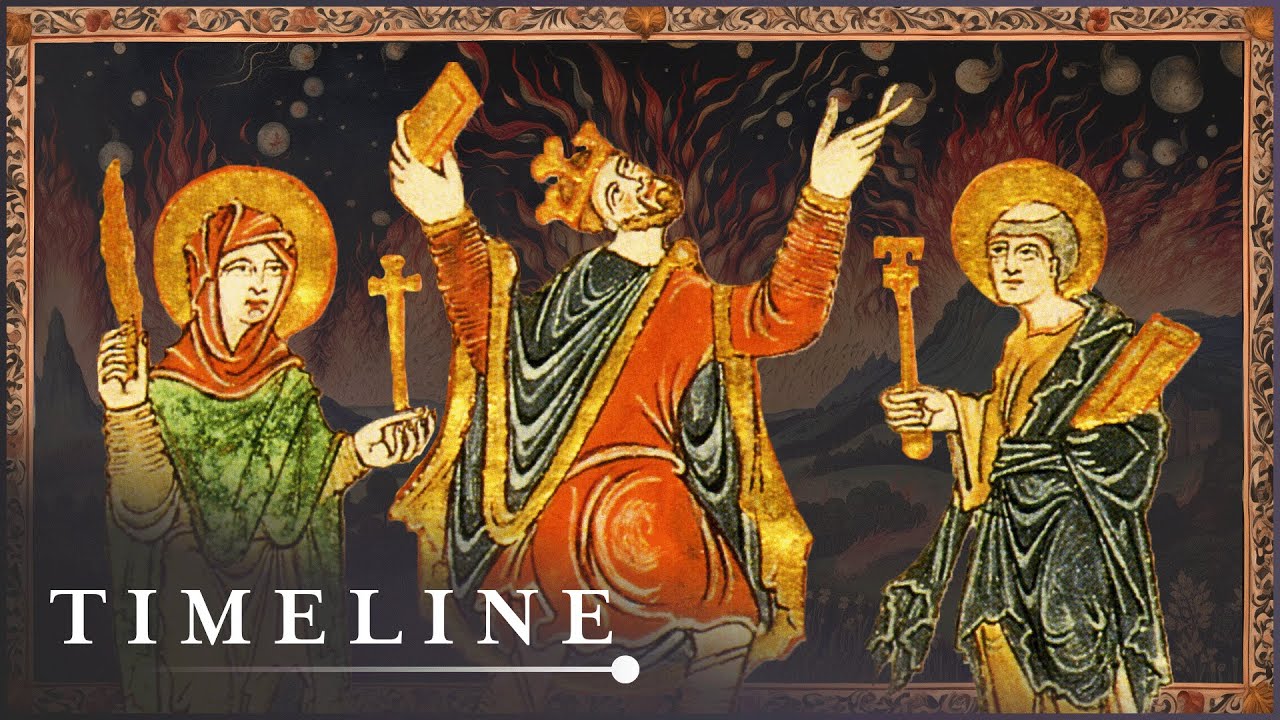
Was The Medieval Anglo-Saxon Period Really A Dark Age? Life In Anglo-Saxon Times
Roman Britain collapses, and the centuries that follow get labeled the Dark Ages almost by default, a gap between empires with nothing much happening in between. This film argues otherwise, using dramatized reconstructions of farms, halls, and monasteries alongside historians unpacking what the Anglo-Saxons actually left behind: law codes, church records, and the Anglo-Saxon Chronicle itself, a year-by-year account kept running for centuries. Alfred the Great gets sustained attention, both as a military leader holding off Viking invasions and as a king who pushed for English-language learning and codified law at a level that undercuts the idea of a lawless dark age. The film moves through religion, tracing how Christianity reorganized society and record-keeping, and through daily life, showing how ordinary households worked, ate, and buried their dead. The reconstructions stay grounded in what the written and archaeological sources actually support rather than reaching for spectacle. The case built here is straightforward: the evidence survives in surprising volume, and it describes a society far more organized than its reputation suggests.