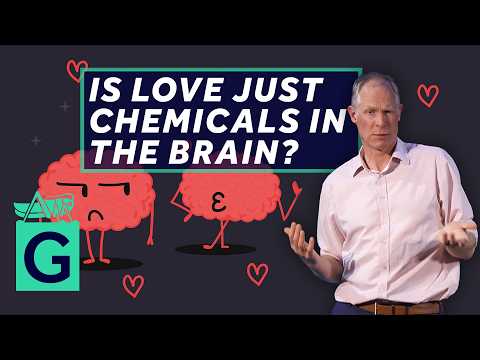
Why Do We Love?
Robin May, Gresham Professor of Physic and Professor of Infectious Disease at the University of Birmingham, lays out the biology behind romantic attachment. He covers the physiological signs of infatuation, from sweating and elevated heart rate to altered amygdala activity that dampens fear, and traces how long that infatuation phase typically lasts before it shifts into companionate attachment. The lecture moves through the evolutionary puzzle of why romantic love exists at all, touching on Darwin's own notes weighing whether to marry, concealed ovulation, and attachment theory. He examines oxytocin's role as a bonding hormone using prairie vole studies, then questions how much that finding actually transfers to humans. The talk closes by treating love as a form of addiction centered on the ventral tegmental area, discussing how this framework explains both healthy bonds and abusive relationships, and whether drugs or therapy could break a damaging one. Recorded at Barnard's Inn Hall, London.