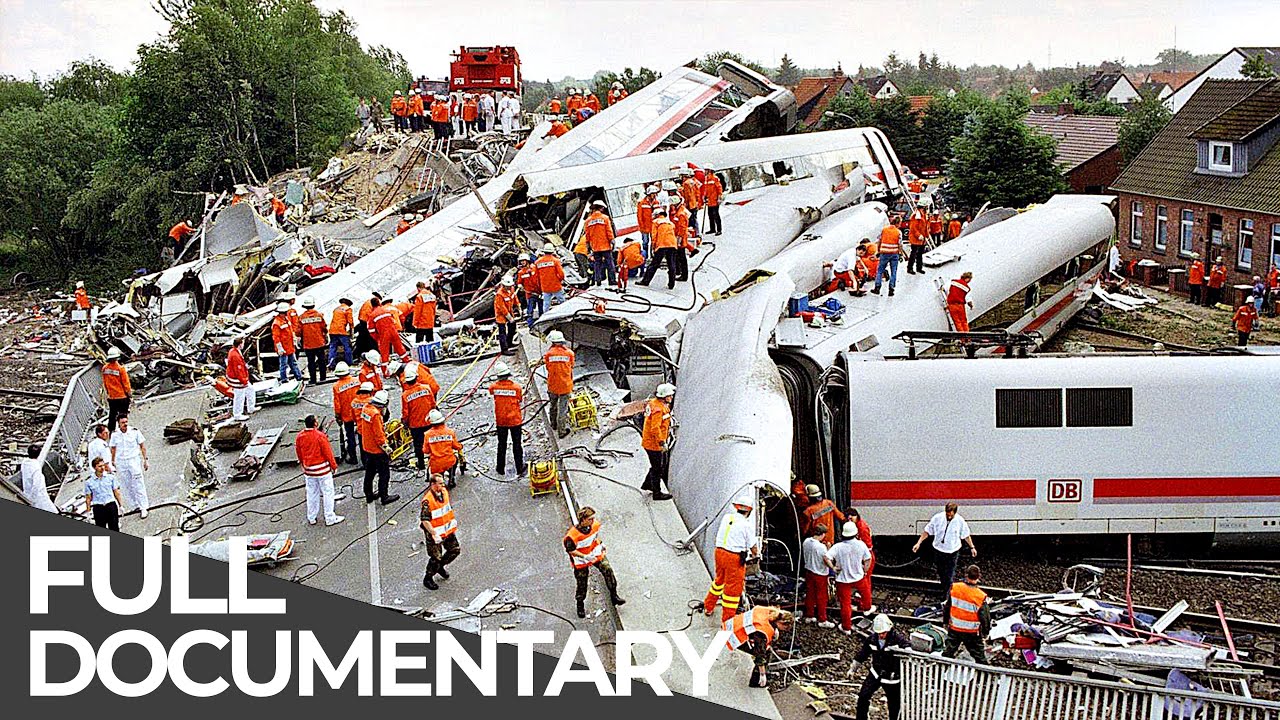
Worst Rail Disaster in the History of Germany
On June 3, 1998, the high-speed ICE train Wilhelm Conrad Röntgen, running at 200 km/h between Munich and Hamburg, derailed near the town of Eschede and slammed into a concrete overpass. The collapse killed 101 people and remains the worst rail disaster in German history and the deadliest high-speed train crash on record. This episode of the engineering-investigation series What Went Wrong reconstructs the failure sequence, tracing it back to a single fatigue crack in the rim of one wheel that grew undetected until it shattered at speed. Archival news footage, crash-site photographs, and diagrams of the wheel's rubber-sprung design sit alongside interviews with engineers and accident investigators who walk through how a known but underestimated wheel fault, combined with inspection intervals and the bridge's design, turned a mechanical defect into a mass-casualty catastrophe. The film also covers the changes German rail made afterward to wheel monitoring and bridge construction, treating the disaster as a case study in how small, missed signals compound into large failures.