Applications of the Large Sieve to Number Theory
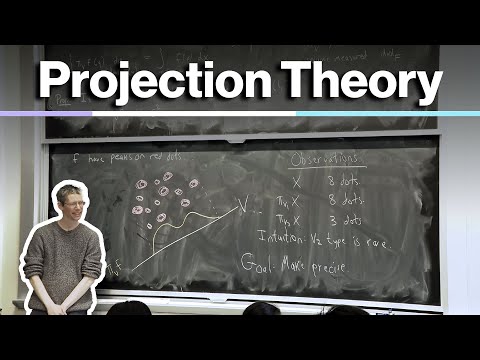
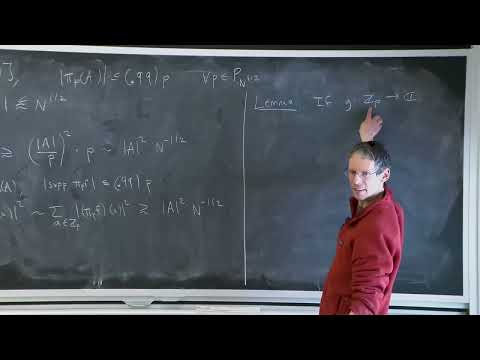
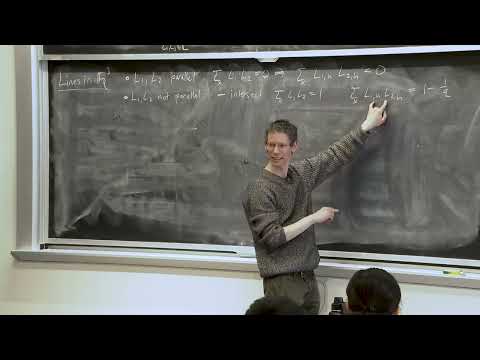
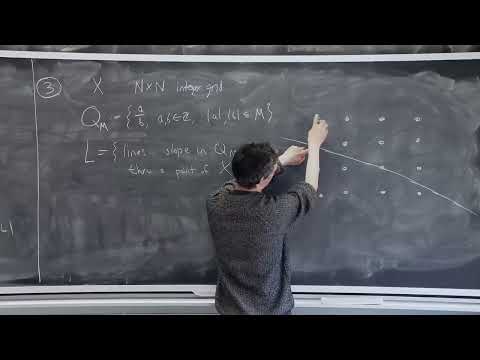
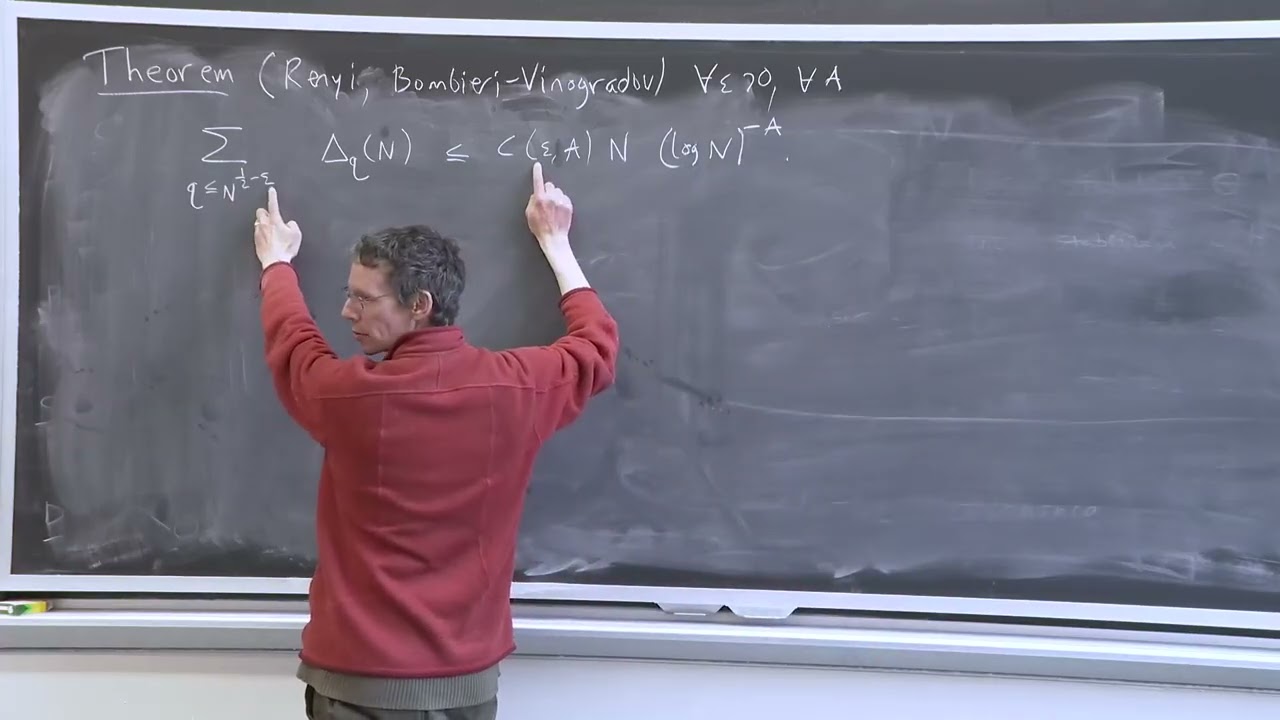
Lawrence D. Guth teaches lecture seven of MIT's 18.156 Projection Theory, turning from the geometry of the large sieve to its payoff in analytic number theory. The focus is the Bombieri-Vinogradov theorem, which controls how evenly prime numbers distribute across residue classes modulo q as q varies, a result that functions as a substitute for the generalized Riemann hypothesis in many applications. Guth builds up the sieve machinery developed in earlier sessions and shows how it bounds error terms uniformly over a range of moduli, rather than for a single fixed q. The eighty-minute session is blackboard-based, following MIT's standard lecture format, and assumes familiarity with prior lectures in the course on sieve methods and projections. It sits within a graduate-level sequence connecting harmonic analysis and incidence geometry to classical questions about prime distribution.