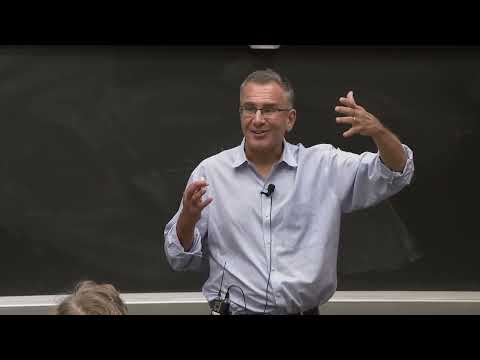
Lecture 11: Social Security
Jonathan Gruber, teaching MIT's 14.41 Public Finance and Public Policy, devotes this lecture to Social Security, the country's largest social insurance program. He walks through how the program is financed through payroll taxes, how benefits are calculated from a worker's earnings history, and why the system was designed as pay-as-you-go rather than pre-funded. Gruber covers the labor supply and retirement incentives built into the benefit formula, the redistributive elements across income groups, and the looming solvency problems as the ratio of workers to retirees shrinks. He uses standard public finance tools, budget constraints and marginal incentive analysis, to evaluate proposed reforms such as raising the retirement age or adjusting the benefit formula. The seventy-seven minute lecture is straightforward chalkboard and slide instruction aimed at students who have already covered the course's earlier material on social insurance theory.