Public Goods Theory, Optimality, and Pricing
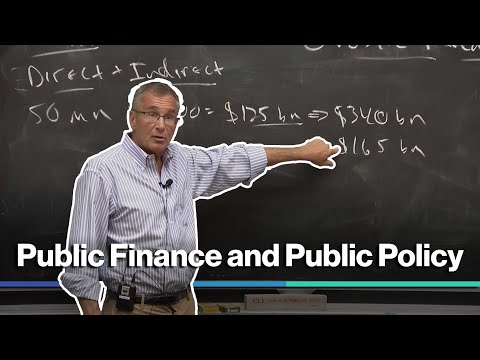
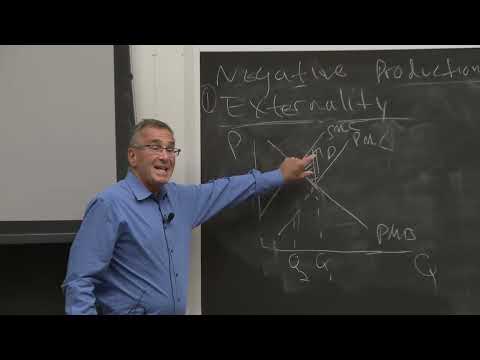
Jonathan Gruber continues MIT's 14.41 Public Finance and Public Policy course with a lecture on public goods, commodities like national defense or clean air that are non-excludable and non-rival in consumption. Gruber works through the theory of optimal provision, building the condition for efficient public goods supply by summing individual marginal willingness to pay rather than adding demand curves horizontally as with private goods. He covers the free rider problem that arises when no one has an incentive to reveal true preferences, discusses why private markets underprovide public goods, and addresses how governments might price or fund them despite the absence of a market mechanism. The seventy nine minute session is delivered chalk and talk style at the blackboard, working through graphs and formal conditions typical of an upper level undergraduate public economics course.