Counting the Fingers of Adam Smith's Invisible Hand
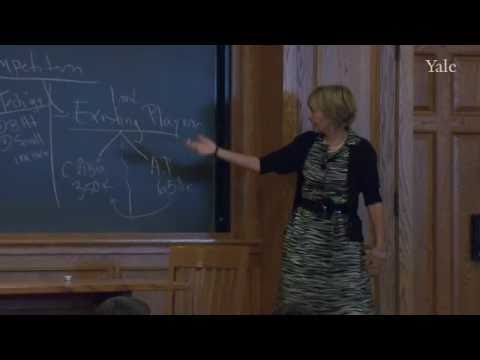
Yale professor Douglas W. Rae examines Adam Smith's concept of the invisible hand, part of his course Capitalism: Success, Crisis and Reform. Rae lays out the preconditions the theory requires: open markets, no single buyer or seller with pricing power, no monopolized technology, honest information, and governments that enforce property and contracts. He then contrasts these with Michael Porter's competitive forces, the rules firms actually follow to avoid competition, raise barriers to entry, and dodge powerful buyers and suppliers, arguing corporate strategy often works against Smith's market conditions rather than with them. Guest speaker Jim Alexander, formerly of Enron, joins to discuss imperfect information and the principal-agent problem from inside a real corporation. Rae closes by revisiting Smith's own layered views on self-interest and morality, complicating the simple free-market reading of his work. The lecture runs just under 47 minutes with a course recap opening the session.