Taxation and Labor Supply
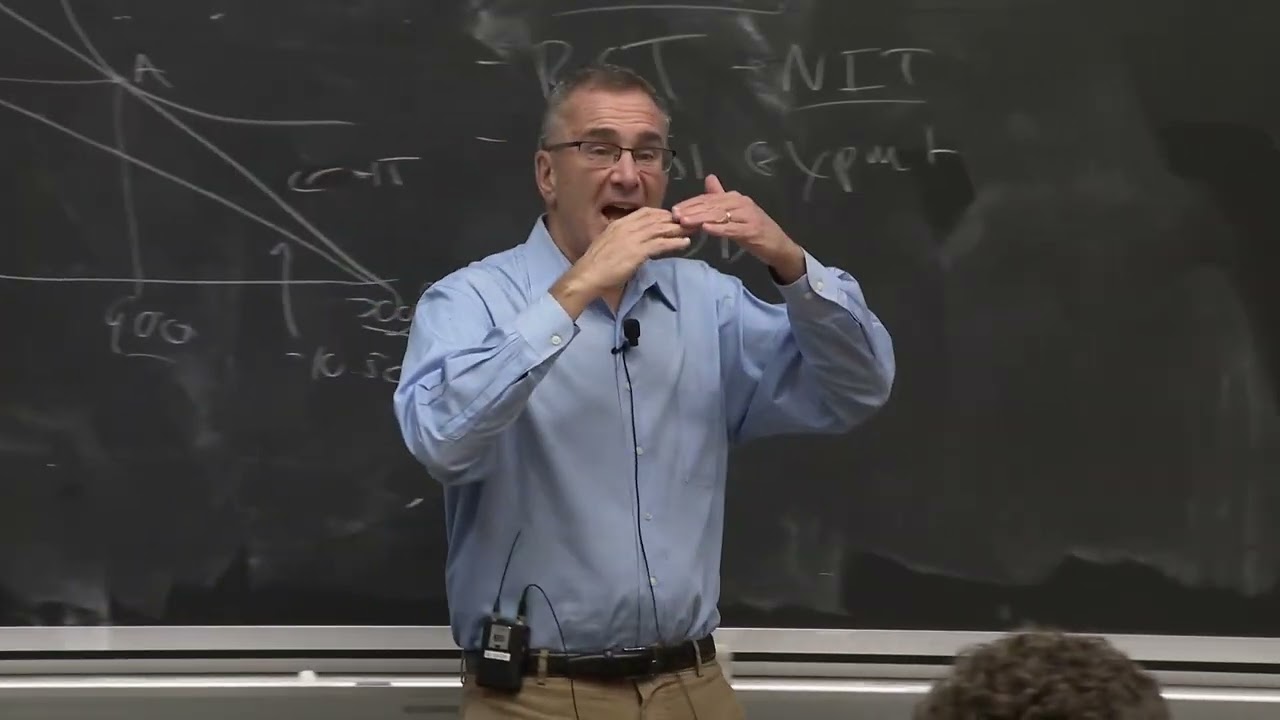
Jonathan Gruber, teaching MIT's 14.41 Public Finance and Public Policy, examines how taxes change the amount people choose to work. He walks through the standard labor supply model, breaking down income and substitution effects to show why a tax increase can either raise or lower hours worked depending on which effect dominates. The lecture covers empirical approaches economists use to measure labor supply elasticity, including natural experiments and studies of specific populations such as married women, and discusses why estimates vary so widely across studies. Gruber connects the theory to real policy questions, including what labor supply elasticities imply for the efficiency costs of taxation and for designing tax systems that raise revenue without excessively discouraging work. As with the rest of the course, the session builds directly on the graphical and algebraic tools introduced earlier in the semester.