Utilitarianism and its Critiques
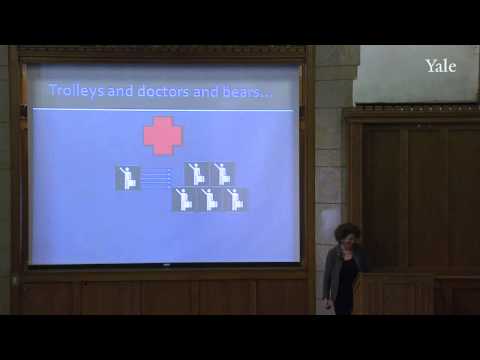
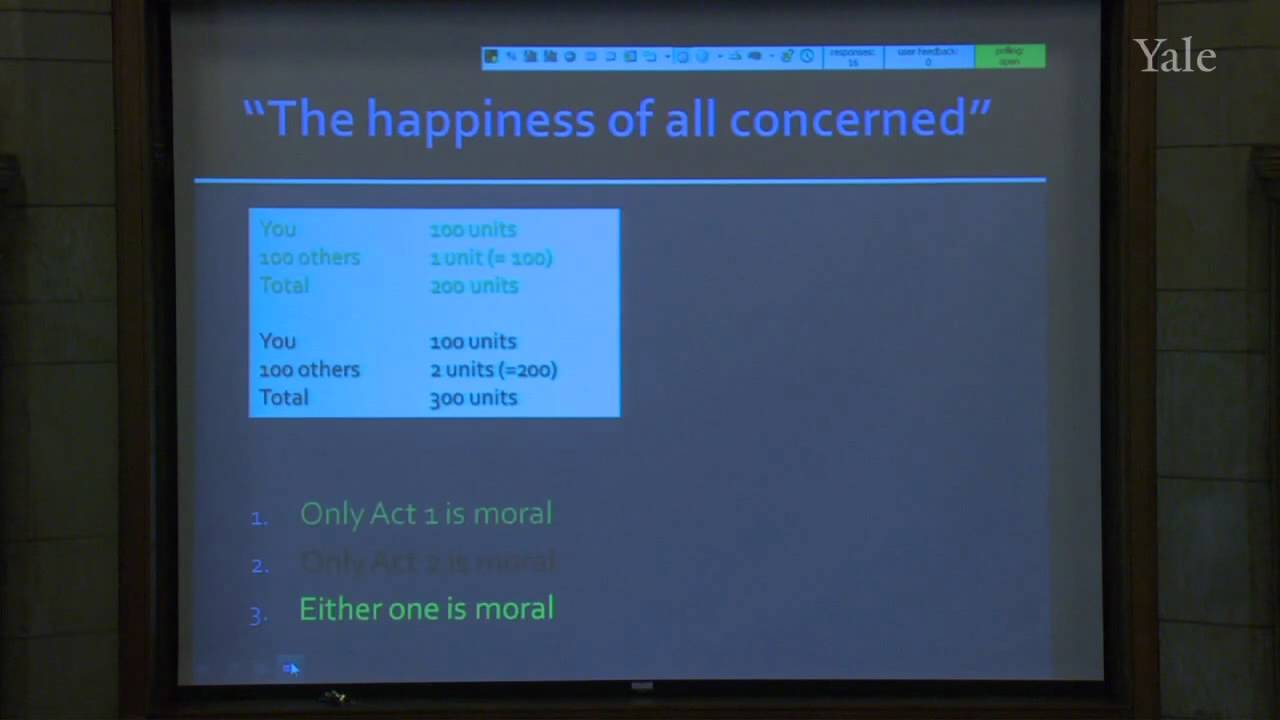
Tamar Gendler, teaching Yale's Philosophy and the Science of Human Nature (PHIL 181), opens with a broad map of moral theory, sketching virtue ethics, deontology, and consequentialism before settling on utilitarianism as put forward by John Stuart Mill. She lays out Mill's Greatest Happiness Principle and then presses it with a hard case: is it justified for many to flourish if that happiness depends on one person's suffering? Gendler works through this dilemma using Ursula K. Le Guin's story 'The Ones Who Walk Away from Omelas,' a city whose perfect happiness rests on the misery of a single child, and connects its logic to present-day scenarios. The lecture runs about forty-seven minutes across three chapters, moving from definitions to Mill's theory to the Omelas case, and closes with the tension between aggregate welfare and individual rights left open rather than resolved.