Behavioral Finance and the Role of Psychology
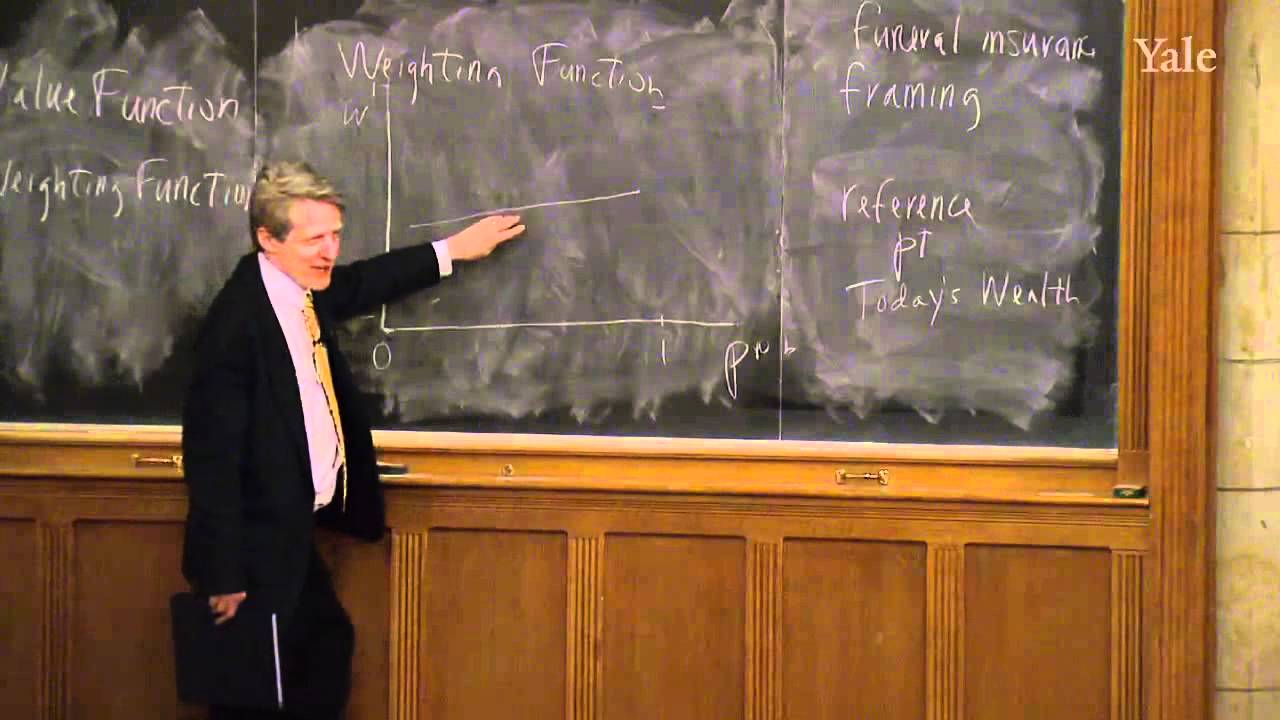
Robert Shiller, teaching Yale's Financial Markets course, argues that classical finance's assumption of rationality misses how people actually decide. He opens with Adam Smith's Theory of Moral Sentiments and the desire for praise-worthiness as a check on exploitative impulses, then moves through personality psychology into Daniel Kahneman and Amos Tversky's Prospect Theory, using diamond ring insurance and flight insurance to show how the value and probability weighting functions play out in ordinary choices. An in-class experiment demonstrates overconfidence, and Shiller continues through Regret Theory, gambling behavior, cognitive dissonance, anchoring, the representativeness heuristic, and social contagion. He closes with a discussion of moral judgment in business, weighing shared values and integrity against self-interest. The lecture is essentially a survey of the psychological findings that behavioral finance draws on to explain market anomalies rationality-based models cannot.