Theory of Debt, Its Proper Role, Leverage Cycles
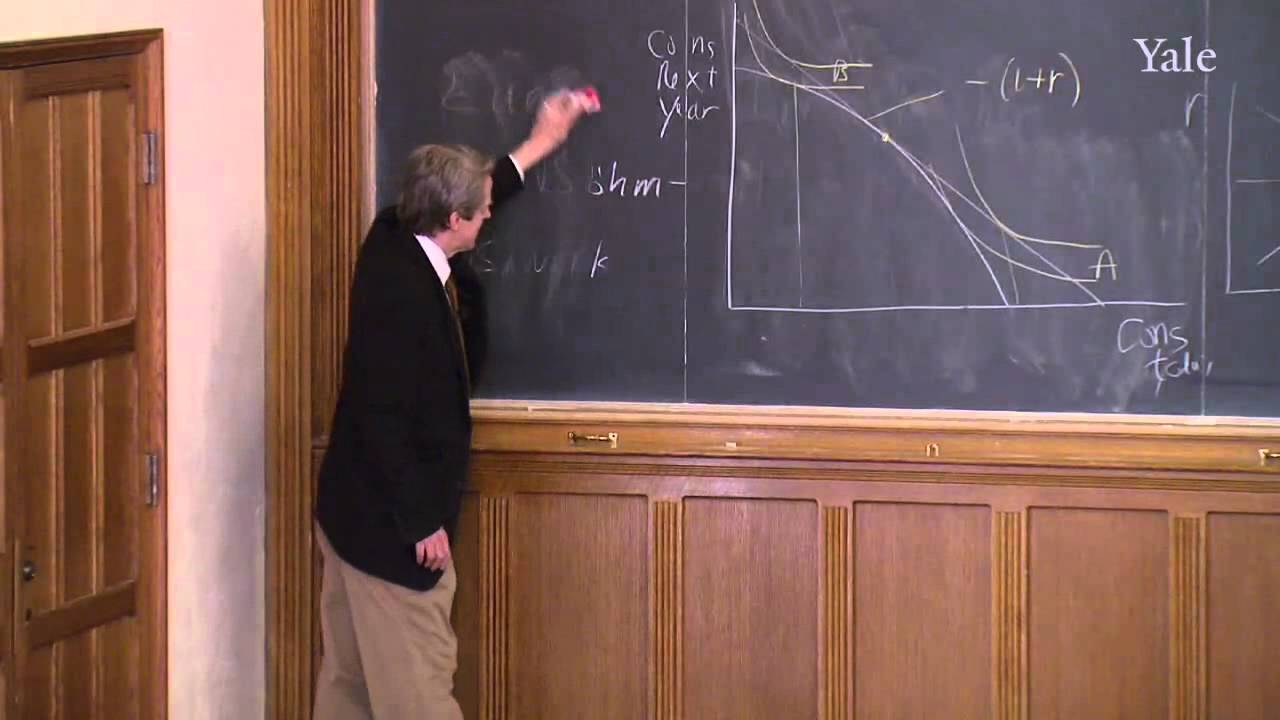
Robert Shiller, teaching Yale's Financial Markets course, lays out the theoretical determinants of interest rates. He opens with Eugen von Boehm-Bawerk's three factors, technical progress, roundaboutness, and time preference, then brings in Irving Fisher's savings-market equilibrium model and Robinson Crusoe economy framework. Shiller derives present discounted value formulas for discount bonds, consols, annuities, and corporate bonds, then works through forward rates and the expectations theory of the term structure. The lecture closes with a history of usurious lending from antiquity to the present and a discussion of Elizabeth Warren's role in creating the Consumer Financial Protection Bureau after the 2000s financial crisis. Chapter markers divide the seventy-five minute session into six segments, moving from abstract interest rate theory to concrete bond pricing to policy history, giving a full arc from classical economic theory to contemporary consumer protection law.